Lewis Carroll and the Liddell family made the July 26th 2010 issue of the New Yorker in reference to his work on election mathematics. Anthony Gottlieb, in his article in the book review department called “Win or Lose: No voting system is flawless. But some are less democratic than others”, gives Dodgson praise for considering voting systems that are more fair than, for instance, the U.S.’s current winner-take-all method.
The history of voting math comes mainly in two chunks: the period of the French Revolution, when some members of France’s Academy of Sciences tried to deduce a rational way of conducting elections, and the nineteen-fifties onward, when economists and game theorists set out to show that this was impossible. Perched in the middle is the Reverend Charles Dodgson, better known as Lewis Carroll, the author of “Alice’s Adventures in Wonderland” and “Through the Looking-Glass.”
National politics weren’t on Dodgson’s mind, it appears, when he first became interested in the theory of voting, in the early eighteen-seventies. Ostensibly, he was pondering the best way for the governing body of Christ Church, Oxford, where he was a tutor in mathematics, to decide on the design for a controversial belfry, and to pick new members of the college. As to what explained his sudden interest in college politics, some people—notably the late economist and Dodgson scholar Duncan Black—have suggested that Alice Liddell, who inspired the Wonderland tale, in 1862, was at the bottom of it. Alice’s father, the head of Christ Church, had forbidden Dodgson further contact with his daughters, and meddling in college politics may have been Dodgson’s way of getting back at him.
The whole article is pretty interesting, and concludes that one of the fairest methods of voting might be similar to how people regularly rank favorites on internet sites like Yelp (“Approval Voting”).
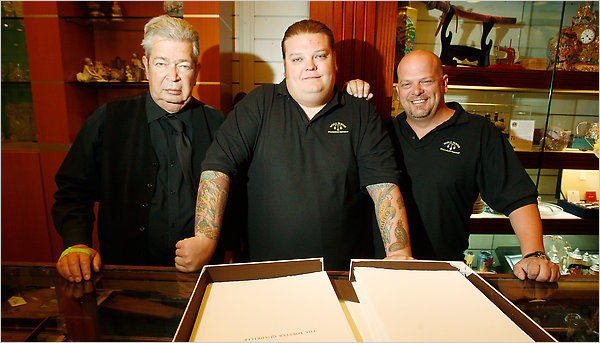
There’s an interesting anecdote in a June 4th 2010 New York Times article about Pawn Stars, a History Channel television show about Las Vegas’s Gold and Silver Pawn Shop.
Shelby Tashlin of Las Vegas walked to the counter clutching a boxed edition of “Alice in Wonderland” containing an etching and 12 lithographs by Salvador Dalí. Ms. Tashlin’s opening thrust: the Dali prints were limited in number. Mr. Harrison’s parry: “He’s pretty well known for fudging numbers.” Mr. Harrison spoke about etching versus lithography and allowed that Dalí and Lewis Carroll were a “wonderful combination.” Then it was time for business. Ms. Tashlin wanted $10,000. Mr. Harrison asked if she had taken a little blue pill, and offered $5,000.
She politely declined and walked away still clutching “Alice in Wonderland.” “I was hoping it would go the other way, but I’m not surprised,” she would tell a reporter later.
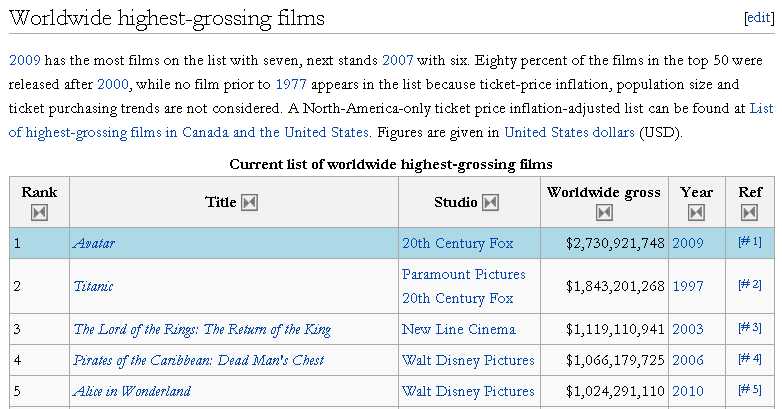
According to the Wikipedia, Tim Burton’s Alice in Wonderland is now behind only two James Cameron films, the final Lord of the Rings movie, & another Disney Johnny Depp flick, as the highest grossing movie world-wide (of all time, partly adjusted for inflation.) They discuss the difficulties of calculating these figures meaningfully (inflation, ticket-price inflation, population and distribution, et cetera, et cetera, et cetera.)
In comparison, in their “List of Highest Grossing Films in the U.S. and Canada: Not Adjusted for Inflation”, Alice in Wonderland is merely 20th, just above Forrest Gump. It is still the highest grossing film of 2010. Not bad for a movie sort-of based on a Victorian-era children’s book with no linear narrative. And also, a bit of an Alice-redemption for the Disney Corporation, whose 1951 version received sour reviews and box office disappointment.
Thanks to Mahendra Singh for reminding us that 136 years ago today Lewis Carroll began his composition of The Hunting of the Snark, “and thus, in a semiotic and hypermetaphysical manner, began decomposing the non-existence of The Hunting of the Snark.” Read more at his excellent blog.
In celebration of Snark Day, here is the full text the first edition, published by Macmillan and Co. in 1876.
In lieu of a rendition of “Happy Birthday To You,” we suggest listening to Billy Connolly as the Bellman in the 1987 April Fool’s Day performance of Mike Batt’s Snark musical. When the musical was originally released as a concept album in 1986, the part of the Bellman was sung by Cliff Richard, possibly the only time Billy Connolly and Cliff Richard have proved substitutable in popular culture.
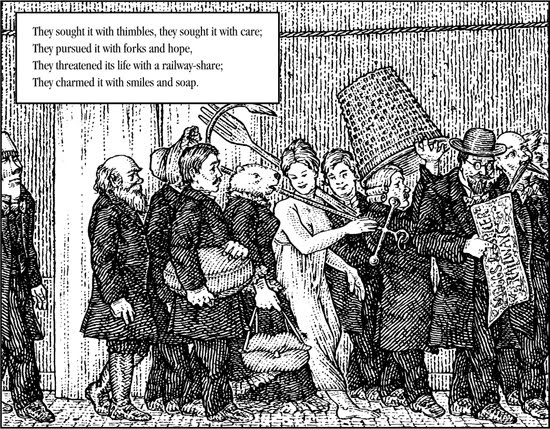
Finally, Mr. Singh (an LCSNA member and Knight Letter editor) is publishing his own beautiful Snark illustrations, coming out November 2nd, 2010, from Melville House, and it’s already available for pre-order on Amazon.com here. Only $10.08! (Don’t be fooled by Amazon’s “look inside,” it links to another edition.) Previews of many of Singh’s illustrations can be seen on his blog, and I’ve reprinted one below.
From Mahendra Singh's illustrations for Lewis Carroll's The Hunting of the Snark
Liz and Francis of Oxford Storypods, the talented folks who put out a very nice audio version of Alice’s Adventures in Wonderland paired with a great selection of poems and letters, have just announced a contest for nonsense writing in a Carrollian vein. You can read the details by clicking here. It’s a particularly challenging contest, since your submission must be very brief (max 200 words) as well as good! Two winners will be selected and awarded the aforementioned Storypods audio book, which is well worth a little nonsensical effort. The winning entries may also be professionally recorded.
7/20 PLEASE NOTE: The contest deadline has been extended to August 15th, 2010, to allow you nonsensical writers more time to flex your imaginations. Storypods has asked that you keep your submissions to the 200 word limit. The two winners will be announced on or about August 25th.
Liz and Francis also hosteda A Mad Hatter’s Lunch Party that sounds delightful.
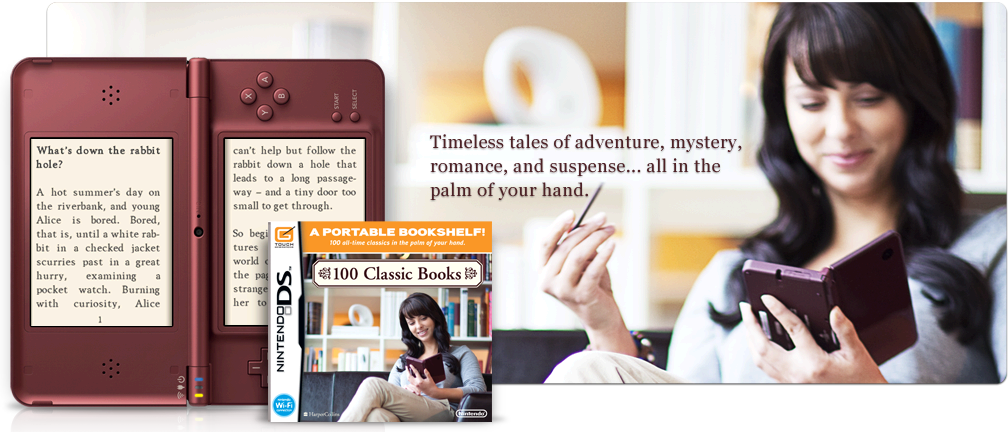
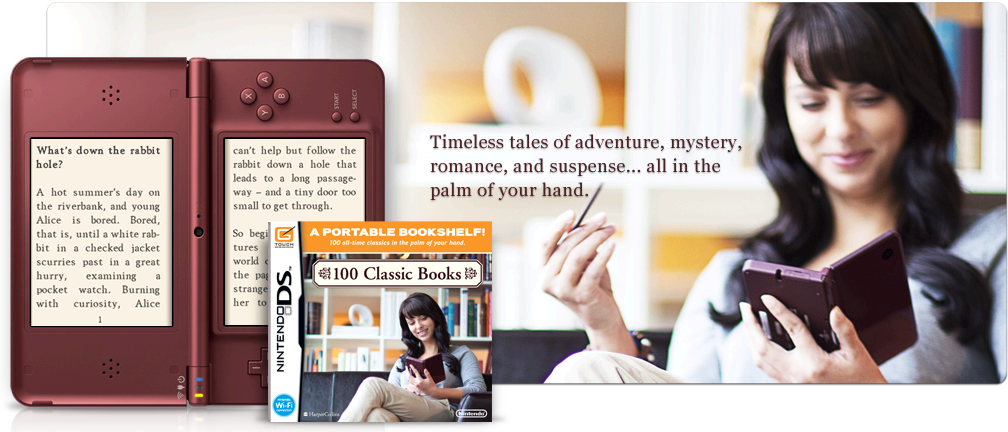
Several LCSNA members have noticed Alice’s Adventures in Wonderland featured in magazine advertisements for something called 100 Classic Books. Gary Brockman describes one ad thus: “Against a background of bookshelves packed with mostly leather-bound volumes, a pair of manicured hands holds open an electronic reader. On the left ‘page’ are the last lines of ‘All in a Golden Afternoon’ (there not being room for an entire stanza) and on the right page the beginning of Chapter 1 of AAIW (there not being room for the entire first sentence). The ad copy reads in part: ‘Own an instant library of 100 of the greatest books ever written, from Alice’s Adventures in Wonderland to The Hound of the Baskervilles.’”
The list price is $19.99 for Nintendo DS (a latter-day Gameboy), and is exactly what it says it is: 100 classic books that you can read on your Nintendo DS. How comfortable these little hand-held gaming devices are for reading full novels is open for debate. But how excellent would it be to find that the teenager zoned out on his gameboy at a restaurant is not rescuing princesses (‘princi’?) but instead reading Don Quixote? I’ve seen young people huddled around tiny iPod screens to watch full length movies, so the idea of having a hundred classic books in miniature at your disposal for long trips might not be entirely claustrophobic to the right demographic.
From the blurb at Nintendo.com:
The postage stamp-sized game card includes a variety of books for all different ages, including seven separate works by Charles Dickens. There are novels that people can enjoy on the beach, such as Jane Austen’s Pride and Prejudice; adventure and mystery novels that can be devoured during summer travels, such as The Adventures of Sherlock Holmes by Arthur Conan Doyle or Bram Stoker’s Dracula; and books that kids can read at home, such as The Jungle Book by Rudyard Kipling or Alice’s Adventures in Wonderland by Lewis Carroll.
There’s more discussion on the Alice pop-up book app for the iPad (originally mentioned here in the post Through the LED Screen). The Atomic Antelope app ($9, or a free demo) is the original Carroll text with interactive animated illustrations based on Tenniel. Mathematician Marcus du Sautoy is ruminating on all of this over at the Guardian this week.
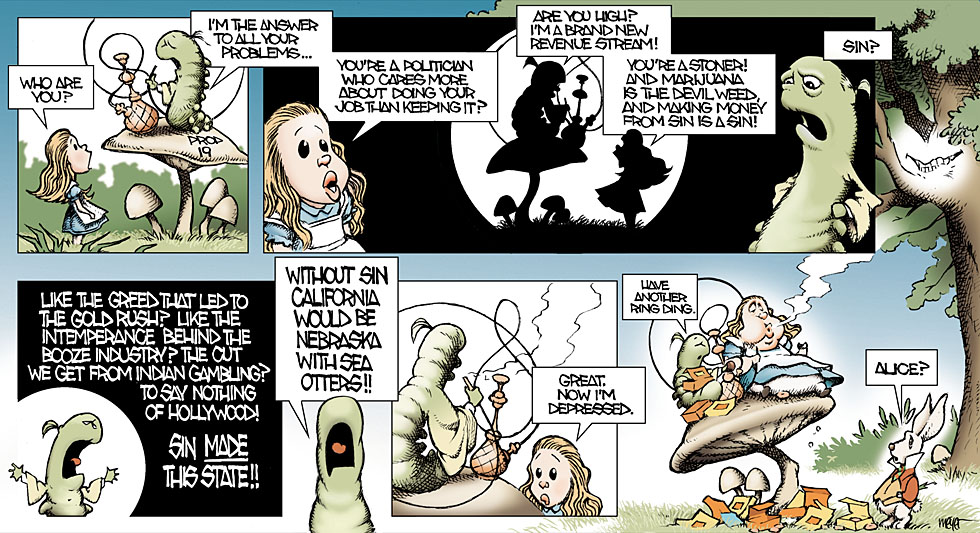
…But this is nothing compared to Alice for the iPad. You can throw tarts at the Queen of Hearts, help the Caterpillar smoke his hookah pipe, make Alice grow as big as a house and then shrink again. You can watch as “the Mad Hatter gets even madder”, and throw pepper at the Duchess. Over the 52 pages of the app there are 20 animated scenes. Each illustration has been taken from the original book and has been made gravity-aware, responding to a shake, tilt or the touch of a finger. The story is never the same twice, because users are Alice’s guide through Wonderland. The Caterpillar will smoke his hookah in a new way when you tilt your iPad, or you can throw more pepper the second time around.
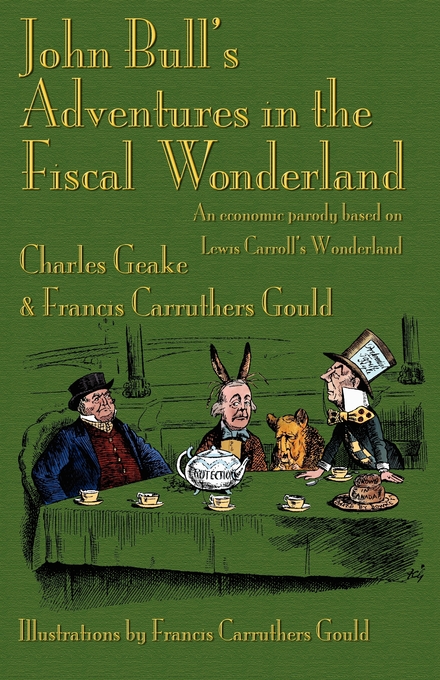
John Bull’s Adventures in Fiscal Wonderland, a new edition from Evertype
John Bull's Adventures in Fiscal Wonderland, a new edition from Evertype
Last month saw two new publications from Evertype, veritable fount of Alice parodies, translations, and rare reprints. (See the complete catalog here.)
John Bull’s Adventures in Fiscal Wonderland, by Charles Geake and Francis Carruthers Gould is a parody of late 19th century British economic politics, originally published in 1904. Publisher Michael Everson reassures readers that no specialist knowledge of either the Tariff Reform League or the Free Food League is required in order to enjoy John Bull’s adventures. (Amazon.com, $12.95)
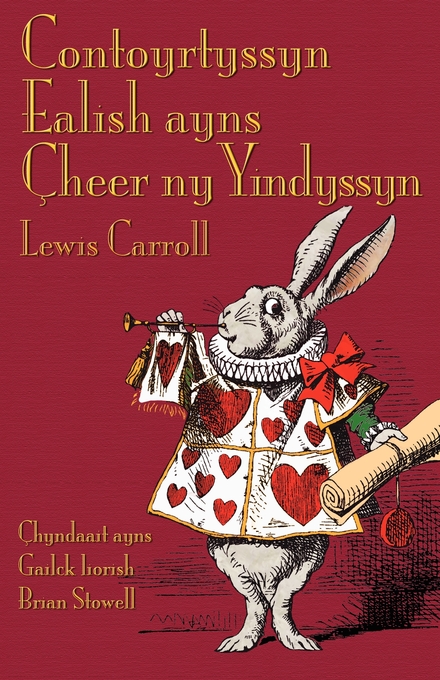
Alice’s Adventures in Wonderland, a Manx translation by Brian Stowell
Contoyrtyssyn Ealish ayns Çheer ny Yindyssyn is the third edition of Brian Stowell’s Manx translation of Alice’s Adventures in Wonderland (Amazon.com, $15.95). Manx, the language of the Isle of Man, is a close relation of Irish and Scottish Gaelic but with a very different orthography. Tragically, no native Manx speakers remain, but the language is the subject of dedicated revival efforts – to which this book will contribute, we hope.
Would-be travelers in a Manx Wonderland might like to practice the following phrases (extracted from Stowell’s translation):
Ta mish keoi – I’m mad
T’ou uss keoi – You’re mad
Ta shin ooilley keoi ayns shoh – We’re all mad here
Ta’n jees oc keoi – They’re both mad
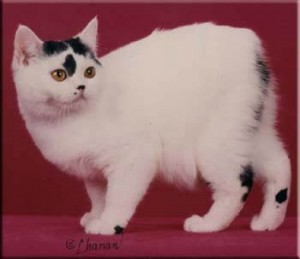
In these circumstances, the book takes the well-deserved liberty of “localizing” a few of Tenniel’s illustrations: apparently the label on Alice’s bottle reads “IU MEE,” for example. But, inquiring minds want to know, does the Cheshire Cat have a tail? Has he been transformed into a Manx cat? Surely one of that curious tail-less breed, with back legs longer than his front legs and a wonderful associated terminology, would feel right at home in Wonderland? (Quiz: Is the cat below a “dimple rumpy, a “rumpy riser,” or a “stumpy”? Visit Our-Cats.com to find out.)
A Manx cat, naturally tail-free (Image from Our-Cats.com)


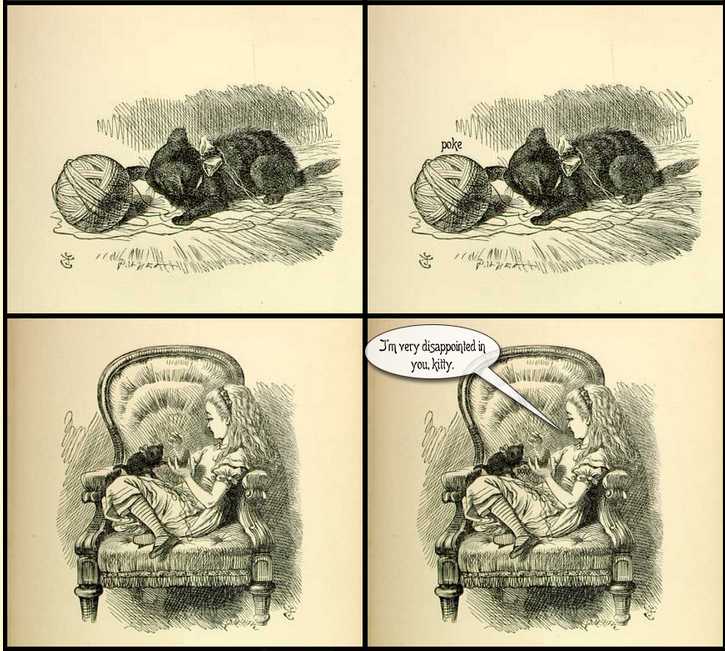 There’s a series of comics at a site called Webcomics Nation, reminiscent in style to David Rees’ cut-&-paste web strips (My New Fighting Technique is Unstoppable & Get Your War On), except it uses Tenniel’s Alice illustrations as the stock images. The series, Here We Come A-Carrolling, is created by a certain Doctor Randomness of Randomness Productions.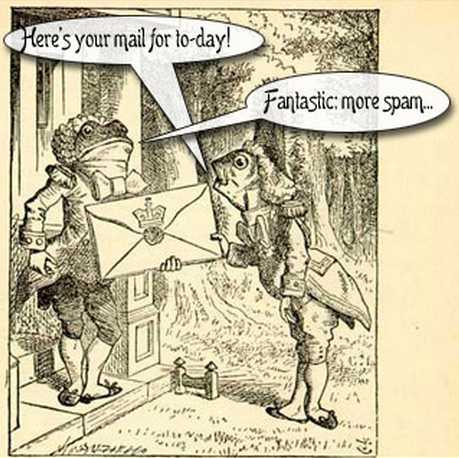

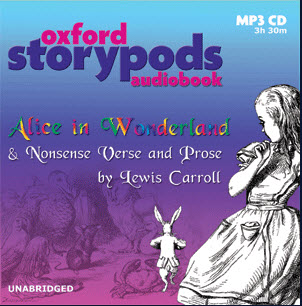
 Liz and Francis of Oxford Storypods, the talented folks who put out a very nice audio version of Alice’s Adventures in Wonderland paired with a great selection of poems and letters, have just announced a contest for nonsense writing in a Carrollian vein. You can read the details by clicking here. It’s a particularly challenging contest, since your submission must be very brief (max 200 words) as well as good! Two winners will be selected and awarded the aforementioned Storypods audio book, which is well worth a little nonsensical effort. The winning entries may also be professionally recorded.