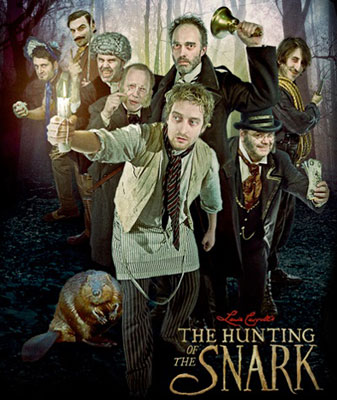
The Onion’s A.V. Club called out for Hollywood to stop making Alice movies and explore some of Carroll’s other works, like Snark and even Sylvie and Bruno. Well, a bigger budget film adaptation of The Hunting of the Snark is being made (bigger compared to last year’s student filmby Peter Pavlakis), directed by Michael McNeff. You can see some pictures at costume designer June Suepunpuck’s website, and there’s a making-of documentary by UCLA MFA students here.
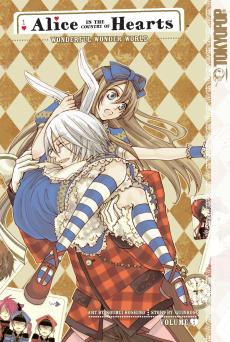
Translating a Japanese manga cartoon into English must be a trip down the rabbit hole itself. Thankfully, some unknown hero has taken the plunge and translations of all three volumes of Heart No Kuni No Alice or Alice in the Country of Hearts (by author Quinrose and artist Hoshino Soumei) are being published this spring. Volumes One and Two are available now and Volume Three will be released on June 1st.
Buy two and preorder one from the publisher Tokyopop, or from Amazon.
What number connects Lewis Carroll with the noble game of baseball? For the answer to this question, please welcome guest blogger and LCSNA-member Ron Papp. ~ Rachel
Jackie Robinson Day has come and gone again. As you may know, on April 15th each year all the Major League Baseball players wear the number 42 on their uniforms.
Beginning in 1997, to commemorate the 50th anniversary of Robinson’s breaking of the color barrier, MLB revived his (the only) league-retired number. At first it was just one player per team who became 42. Subsequently, the number is worn by every player, coach and umpire. With some 20 teams playing on that day, and with four coaches per team and three umpires per game, there’s a ballpark figure of 630 wearing the number 42.
One plan for the coming year is to pass out t-shirts stamped with the famous integer to the thousands of fans at any given stadium.
But, of course, it would be difficult to tie in this annual phenomenon with Lewis Carroll other than it was his favorite number. Robinson played for the Brooklyn Dodgers, not the Brook-leaping Dodgsons. Yet, the beginnings of baseball do hail back to Carroll’s time. Abner Doubleday invented the game in 1839, when Carroll was about seven. Baseball teams (wearing straw caps) rose in popularity during the Civil War when Alice in Wonderland was written. Also, the Cincinnati Red Stockings became the first all-professional team in 1869, with the regulation size and weight of a baseball being decided in 1872 – both around the time of Through the Looking-Glass’s release.
A pity there isn’t more, considering the great number of people commemorating (in part) the number 42 while playing games. And always just nineteen days before Alice’s birthday!
Rachel: That sounds like a game to me! Can anyone think of some more connections between Carroll, Alice and the game of baseball – numerical, historical, linguistic or spurious? Next week we’ll try curling…
Alice in Wonderland and Through the Looking-Glass are, I understand, to be published for the first time in German. When I first learned this important fact, it surprised me for a moment, for I had thought that both these classics had by this time passed into all civilized tongues; but after some little reflection, I soon realized that if they had been popular in Germany, we should have known about it. It is not difficult to imagine what will happen when the Alice books are well known there, for we know what happened to Shakespeare. A cloud of commentators with gather, and a thousand solemn Teutons will sit down to write huge volumes of comment and criticism; they will contrast and compare the characters (there will even be a short chapter on Bill the Lizard), and will offer numerous conflicting interpretations of the jokes. After that, Freud and Jung and their followers will inevitably arrive upon the scene, and they will give us appalling volumes on Sexualtheorie of Alice in Wonderland, on the Assoziationsfähigkeit und Assoziationsstudien of Jabberwocky, on the inner meaning of the conflict between Tweedledum and Tweedledee from the psychoanalytische und psychopathologische points of view.
-J.B. Priestley, “A Note on Humpty Dumpty”, 1921.
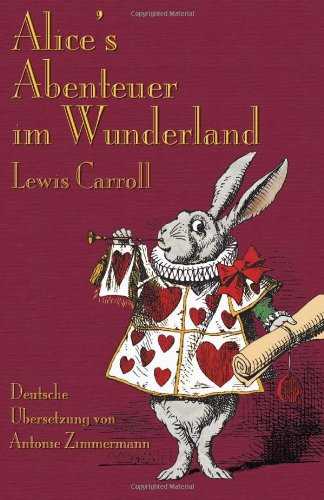
While Priestley was prophetically correct about the imminent psycho-analysis of Wonderland (and, obviously, not just by Germans), he was incorrect about that being the first German translation published in the 1920s. Antonie Zimmermann’s translation of Alice’s Abenteuer im Wunderland was published in 1869, the first ever translation of Alice into another language. Michael Everson is taking the considerable risk (according to Priestley) exposing the classic tale to Germans once again by re-publishing the original Zimmermann. (His wonderful Evertype publishing house released nine Carroll titles in 2009, and is so far sparing no moments this year with some new fascinating versions, parodies, and rare translations – – more at alice-in-wonderland-books.com.) Aus dem Klappentext:
Lewis Carroll ist ein Pseudonym. Charles Lutwidge Dodgson war der eigentliche Name des Autors; er war Dozent für Mathematik am Christ Church College in Oxford. Dodgson begann die Geschichte am 4. Juli 1862 bei einer Ruderpartie auf der Themse in Oxford, zusammen mit Pfarrer Robinson Duckworth, mit Alice Liddell (zehn Jahre) – der Tochter des Dekans der Christ Church –, und mit ihren beiden Schwestern Lorina (dreizehn Jahre) und Edith (acht Jahre). Wie man dem Gedicht am Anfang des Buches entnehmen kann, baten die drei Mädchen Dodgson um eine Geschichte und, zunächst widerwillig, begann er, ihnen die erste Version dieser Geschichte zu erzählen. Es gibt im Text des Buches, das schließlich im Jahre 1865 veröffentlicht wurde, viele versteckte Bezüge zu den fünf Personen.
Alice fans and collectors tend to like real books – crisp, dusty, or yellowing, and preferably with pictures and conversations. Whilst reports of the death of print media have been greatly exaggerated, the iPad is the next big test of whether tablet technology can thrive in the mainstream, resurrect the glossy magazines, bring down the price and weight of textbooks, and broaden everyone’s access to rare books.
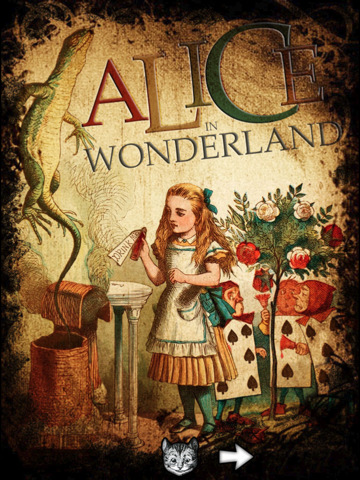
Even if digital readers sound horrible to you, it’s difficult to deny that this new Alice’s Adventures in Wonderland digital pop-up book for the iPad is fascinating. It looks like it successfully balances a functional reading experience with eye-popping fun. Is it any surprise the revolutionary app designers at Atomic Antelope chose Carroll’s story? (Look, their websitehas Tenniel illustations in its masthead!) This year has also seen the classic Alice tale tapped for the new 3D movie technology, but this is the actual Carroll text and Tenniel being used to demonstrate what a 21st Century digital interactive children’s book might start to look like.
There’s a sample version for free at theiStore and thefull version sells for $9. Here’s the raving from the geeks at Gizmodo:
I keep twisting and turning my iPad with childlike wonder while reading the familiar tale of the adventures of a girl named Alice. For the first time in my life, I’m blown away by an interactive book design.
Alice for the iPad is a cute app which contains a slightly interactive version of a beloved story. It’s not interactive to the point of annoyance and tackiness, but instead full of clever little touches like mushrooms that you can toss around a room with a twist of your iPad or an Alice who grows and shrinks as you move your gadget around.
[…]And while it doesn’t seem to be intended for adults, I couldn’t be more fascinated by it. It’s quite possible the cleverest book I’ve seen so far and exactly how I dreamed books would look one day.
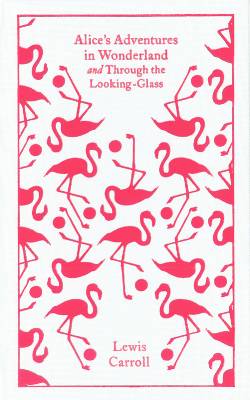
Just a quick mention for Penguin’s new flamingo-bound hardcover edition of Alice’s Adventures in Wonderland. It is part of a new range of hardcover classics, all with linen cases created by Coralie Bickford-Smith, typographer and chief cover designer for Penguin (she also has a small line in tea-towels).
The edition was released on March 10th, with ISBN 9780141192468. It is for sale on the Penguin.com USA site for $20.
The Lewis Carroll Society of Brazil is having their First Anniversary meeting today at No Centro Cultural Brasile iro Britânico (Rua Ferreira de Araújo, 741 – Pinheiros, São Paulo). Here’s the description from their blog(fed thru Google Translate):
Is coming the day of our big event desaniversário! The Lewis Carroll Society of Brazil, with support from the Cultural Inglesa promote an evening attractions alicinógenas. Lectures, readings, videos, music, poetry, illustration. Come for tea snack nuts and mushrooms colorful drink sip months of fun.
The writer Wilson Bueno come from Curitiba to create connections between the hilarious nonsense of Lewis Carroll and the riddles of the deep interior. A designer and artist Adriana Peliano will comment on the story of the illustrations of Alice, from Victorian England to contemporary art. The group Frame Circus will live a soundtrack for the 1903 silent film of Alice in Wonderland, the first ever conducted on the subject. The literature teacher Theresa Vasquez will read translations of Jabberwocky accompanied by music and images. These and other attractions invite the lovers of Alice for an unforgettable evening!
Follow the white rabbit, but do not be late and immerse us in this adventure!
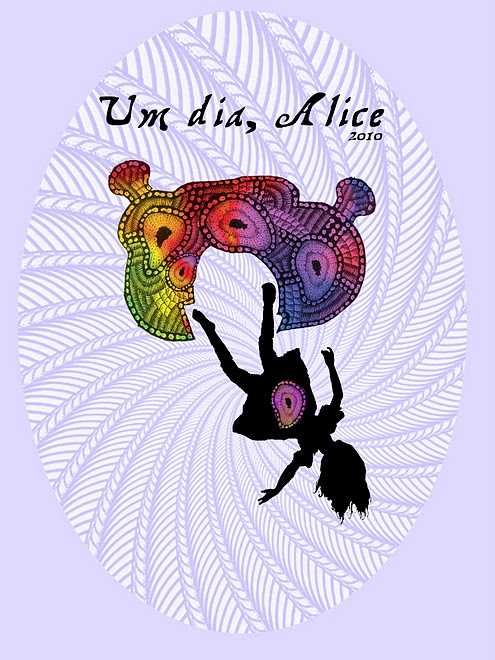
Adriana Peliano upkeeps several colorful Carroll blogs for the Sociedade: alicenations.blogspot.comfor the general public, brasillewiscarroll.blogspot.org for deeper research, and umdialice.blogspot.com to make an even three. On the latter, Senhora Peliano just added this video “traveling in the imagination of Alice” (not for epileptics or vertiginous cunicuphobiacs.)
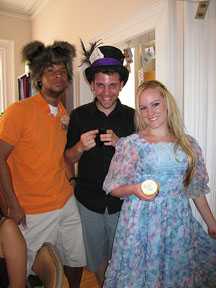
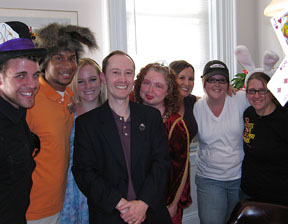
LCSNA President Andrew Sellon gave an informal talk to an appreciative audience at St. Peter’s College in Jersey City, NJ on Wednesday, April 7th, about how he fell down the rabbit hole and ended up a Lewis Carroll fan for life. English Club President Jonathan Brantley (pictured to the left wearing March Hare ears) had contacted Andrew via Facebook to invite him to attend their informal “tea party symposium” as keynote speaker. Some attendees even dressed up for the occasion. After his talk, Andrew led a lively discussion about the recent Tim Burton film and other adaptations. Jonathan also presented an excellent paper giving an overview of the creation of the two Alice books and their continuing impact on our culture today. There was an ample buffet of Carrollian treats, and no one at the table was forced to “move down! move down!” All in all, a brillig event. (More photos can be seen on Facebook here.)