
The Blog of the LCSNA

Burbles

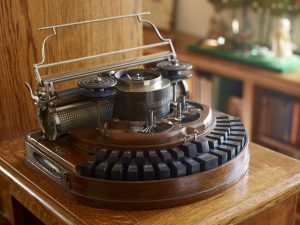
Charles Dodgson's typewriter, pictured in Charlie Lovett's home

Welcome to the LCSNA’s blog, where you can read regular updates about Lewis Carroll’s influence on all aspects of life.  Please keep in mind that these posts are informational only; we do not endorse any link, statement or product cited below unless we specifically state that within the post. Also, the bloggers do not speak for the LCSNA as a whole. We hope you’ll visit often to review the posts and add comments. Subscribe to blog notifications below.

To submit items for our blog, please email us at blogmaster@lewiscarroll.org.

The Blog of the LCSNA

Lewis Carroll Genootschap Reviews “Lewis Carroll and Alice on Stage: The Savile Clarke Letters”

Recently, the Dutch Lewis Carroll Genootschap (Society) reviewed the LCSNA’s latest book, Lewis Carroll and Alice on Stage: The Savile Clarke Letters by Clare Imholtz! The in-depth and effusive review was written by Henk van Vliegen and published in the Genootschap’s journal Phlizz, and they’ve generously allowed us to post it in its entirety here. Many thanks to our sister society in the Netherlands for their permission, and to Dr. Gerard T. Moran for the English translation.                                                      

Review of Lewis Carroll and Alice on Stage: The Savile Clarke Letters

Under the cloth dust jacket with red letters is a red bound book with as dedication the print (voorplat) of John Tenniel’s White Rabbit. We encounter that red, both first editions of the Alice books were in red, regularly in the layout of this beautiful book.  On the flyleaves and also on the pages with the letters, the notes are printed in red (see p. 56/7) as are the letters of the alphabet in the index and the page numbers on the list of illustrations.

Opposite the title page there is a splendid photo of Phoebe Carlo as Alice. The core of the books consists of 103 letters from Charles Dodgson to the playwright, journalist and critic Henry Savile Clarke, who made a successful play of out of  both Alice books. The first series runs from December 1886 to August 1887 in the Prince of Wales’s theatre in London followed by a regional tour; the revival from the end of December 1888 until the beginning of February was only in the Globe Theater in London.  

Prologue

The book begins with a real surprise: a posthumous piece , here published for the fist time, by Carroll phenomenon Morton N. Cohen “Lewis Carroll in the Wings”.  Prologue is the right word for it is an homage to the initiator of this correspondence  and is a piece in which the rest of the book is introduced in a pleasant way.  You’re warmly prepared  by Dodgson’s “intense and complex relationship with the stage” as Cohen puts it. It goes back to 22 June 1855 when Dodgson was 23 and had just got his Bachelor of Arts. He saw Shakespeare’s Henry VIII and was hooked.

Cohen examines the relationship from four points of view.

The first was his relation as theatergoer. He saw everything that was staged in Oxford and went to theaters in London with some regularity. He developed a definite preference for certain genres, actors  and authors with a definite taste for the conventional, traditional sort. He gladly frequented circles of producers, authors and actors, among them child stars, and took family and friends to performances. All the more surprising since the church was skeptical of the theater.

One of Dodgson’s key aspects was a holy fear of grossness (sexual) vulgarities or religious satire. For that reason he could leave a performance or got mad when he saw a good pantomime that was ruined by a closing clownish piece with vulgar elements.

The second point was Dodgson as playwright. He certainly was not one and knew it

The third point as author who wanted to see his Alice books produced as plays. Within a year of publication of the Wonderland book he had started thinking of adapting them for the stage even seeking the advice of professionals. But nothing happened for years though he had registered them as drama so he could retain the copyright.

It was only in 1886 that the business picked up with Henry Savile Clarke, an experienced playwright. He wrote to Dodgson with a request to stage the books. Dodgson answered in the affirmative but on condition that the plays contain no “coarseness”, no vulgarity.  The “dream play”, as it was called in a poster, premiered at Christmas time on 23 December 1886. There followed 70 performances in London and a regional tour. Dodgson saw the play only a week after the premiere. The play received positive reviews (Cohen doesn’t pay any attention to the negative ones) and the revival two years later got even better ones, though much fewer in number. The Savile Clarke adaption remained long in use. Imholtz cites a poster from 1906 used for a performance from around 1934.

The fourth point was Dodgson as theoretician of the theater. Many articles. Although he was a faithful churchgoer and conservative Dodgson was crazy about theater. He certainly realized the dangers: loose morals and a messy environment, but considered the stage an important social force, good for the elevation of the intellect as long as properly applied. He gave his “salary” for the second series to Savile Clarke, often saw to it that child actors remained in school, supported them at times financially or saw to possibilities for attending theater school. He opposed the law that prohibited children under 10 from becoming actors. It gave them pleasure but also was often important as a supplement to family income.

Introduction

Imholtz’s use of Cohen’s text as prologue is a good move, the audience continually experiences pleasure reading the letters. Cohen asked Imholtz to publish and annotate those letters definitely addressed to one person or theme, in which a lot is made clear about Dodgson’s personality and the two Alice books. Unfortunately, Clarke’s letters have not survived. We therefore have to surmise their content from Carroll’s (Dodgson) answer, but Clarke frequently didn’t react.

Dodgson starts out as said, somewhat on the offensive: no coarseness and vulgarities and he sticks to that. He defends some preferences with verve, for example, that only one of the books be used, but in fact he is always lenient and gradually more indulgent. Nonetheless he is not adverse to peppering Clarke continuously, also during the revival, with proposals, complaints, and improvements.

The two finally meet each other on the 29th of March just before the provincial tour started. Despite their differences of opinion they maintained a friendly relationship.

Dodson wanted to make his authorship (as Lewis Carroll) clear and wrote in the periodical The Theatre about the performance. On 1 April 1887 his, since well known piece “Alice on the Stage”, appears. Imholtz prints the text as an appendix. Carroll wrote a friendly article about the performance, even though he had definite  criticisms, as we know from his diary and letters to friends. He had steadily less desire to see the play.

At the revival Dodgson again had all kinds of objections. The revival’s run time was shortened, decided on 9 February 1889. Dodgson thought this had to do with low attendance figures but that wasn’t the case. It probably was due to the use of child actors who were too young and also that the theatre manager had planned another production.

Dodgson himself introduced the two actresses playing Alice. He further favored involving a couple of experienced adult actors to improve the quality. Clarke chose the composer. In terms of finances Dodgson generosity is striking. He thought that he himself got little, but that was not a point. But he objected to the fact that the theater manager got too much and Clarke relatively little. He donated his proceeds to Clarke for the second series, after all he had no children to feed.

In contrast to Cohen, Imholtz discusses, in addition to the positive reviews, some negative ones (one even spoke about the “ ….possibility of giving the children their first real experience of boredom”). Some reviews delve into actors, music, decor and costumes  so that we come to know quite a bit. For the rest we have the libretto that at almost all performances was for sale, (the few times it was not Dodgson was angry).

Imholtz devotes a special part of the introduction to Clake’s three daughters. Some remarks in the letters recall the rumors of Dodgson’s rather sticky conduct with his female child friends. He whines about kissing/kissability of the Clarke’s children”  (who were 14, 16 and 17 at the time). And he’s insulted when a girl ends a letter not with “love”, but with “friendly greetings”.

Then follow Sources and an explanation of the editorial principles. All letters are reproduced in full. The extensive notes are based above all on Dodgson’s diaries and letters to family and friends. There are of course other sources such as the British Newspaper Archive. The name Lewis Carroll is used to denote the author, otherwise Imholtz uses Charles Dodgson exclusively.

Armed with the knowledge provided in the Prologue and Introduction the letters are crystal clear.

Letters and Notes pp. 53-249 30-8-1886 –30-5-1892

(with a gap between 5-11 1887 and 28 -4-1888,  then it continues about the revival)

….but the only essential condition that I should have your written guarantee , that neither in the libretto nor in any of the stage business , shall any coarseness, or anything suggestive of coarseness be admitted” (Dodgson, 30-8-1886)

“There is one & only one condition…” as Dodgson squarely begins in answer to Savile Clarke’s question whether he can produce Alice for the stage. It is the start of a very interesting exchange of letters with one of the things that mattered most to Dodgson, in this correspondence as well. Dodgson attends a performance of the revival with two extraordinarily vulgar moments, one in which the White King falls over backwards with legs akimbo. He threatens to withdraw his approval and Clarke revises immediately.

There are more recurring matters that start in this letter. Dodgson wants namely that just one book be used but finally agrees that both Alice books are used but not mixed together. And that takes place: Wonderland comes before the intermission and Through the Looking Glass after.

Wherever possible he wants the original tunes of the Alice parodies used.

Dodgson bombards Clarke with instructions, proposals and suggestions. When the performances incorporate new ideas , he complains about things such as the Queens’ awful diction, scenes that don’t work or missing librettos. After a few weeks of the first  series he even wants to stop the production. He introduces such desires and complaints with a resounding understatement such as: “a few other matters…”

Clarke barely reacts to all these lists of wishes and criticisms, but both think the scene of the Walrus and the Carpenter poor. It is replaced with a nice revision: the addition of three oyster ghosts, one of whom dances and sings a hornpipe, which is a great success. On 24 September 1886 you read the first of many invitations from Dodgson to Clarke to visit him, which never happens but Dodgson does visit Clarke later when he’s in London. There are interesting items about Dodgson’s suggestions as actors. Both Alices,  Phoebe Carlo and Isa Bowman were proposed by Dodgson. With Bowman, Dodgson does his extra  best in a couple of letters to get her selected, undoubtedly under her influence. For the second series he really wants Irene Vanburgh as Queen of Hearts and White Queen, which succeeds, but not to get her picked in the opening scene as Fairy Queen. Clarke doesn’t add this character. A real treat is the exposé, for which Dodgson takes the time on 17 September 1886, in which he writes of the possibility of special type of theater for children. He theorizes about writers and all kinds of books that would be suitable but also about the building itself, preferably small which would lead to it being sold out more often. And that would be good for the idea, just imagine!

Just as nice are Dodgson’s reflections in a letter dated 12-2-1889, as the series closes, about having an Alice in Wonderland every Christmas, but then such as he would have wished it, with new elements and fresh new songs, so that you can keep going anew!

There are also letters in which financial matters dominate. Dodgson is especially unhappy with the conduct and compensation of the managers, especially compared to the amount Clarke earns on the production. Time after time Dodgson tries to get an answer to the question whether a book can be published with music from the production. It was not to come in his lifetime. Just as to the question whether photos and especially Alice books could be sold in the Globe Theater. As a true marketing man he has it planned out but when it finally happens it was so badly produced that only 5 copies of this so-called People’s Editions were sold. With the revival Dodgson complained a couple of times that you even had to pay for the program. 

Imholtz’s footnotes

Imholtz’s notes are careful and generous without sinning by providing too much information. She even manages to summarize whole research projects in the notes. She lucidly explains the difference between a pantomime  and a harlequinade. The extensiveness only rarely feels unnecessary, for example, when researching addresses of child actors who received a book from Carroll as memento of their participation. It is also unnecessary to repeat twice the explanation of “affty” (affectionately) ( notes 192, 194, 229).

Here and there she allows herself a joke: “unsurprisingly, Dodgson did not hesitate to jump in with {advice} advise (sic). In note 200 she reacts to Dodgson’s affected attempt to portray Isa  as pitiful. She is very much afraid that the revival will be canceled because no venue is available. Imholtz: “Dodgson is Isa’s White Knight.”

She treats Dodgson in any case critically. A letter of 7-11-1887 to Kitty Clarke (according to Imholtz)  begins “Dear Child . Imholtz notes ironically “aged fifteen”. On 25-12-1889 Dodgson complains that Isa is not named in advertisements. Imholtz wonders whether Isa at that point in her career could serve to attract an audience.

Appendices

After the letters there are several appendices altogether more than 100 pages! North Americans are crazy about appendices in their scholarly literature. You of course don’t have to read an appendix but it is often full of interesting facts and even theoretical underpinnings.     

Appendix A: Crustacean Mutations (“Schaalderige Veranderingen ») concerns the transformations through time of the parody of “Tis the voice of the lobster” from Chapter 10 of Wonderland. Imholtz reconstructs these changes, a reconstruction that is completely at home here because it is partially due to the idea that Clarke had to expand the song for the stage performance. Naturally you could skip this appendix, thinking  “nonsense” but all the same it is a stirring bit of history and funny here and there as well.

Appendix B, about Dodgson and Alice on the stage overlaps a bit with the Prologue, which also began with the observation that Dodgson had early on weighed the possibility of adapting Alice for the stage (an adaptation that would not be a drama, pantomime, entertainment, magic lantern show, extravaganza or portrait (tableau).  And also the question of whether Dodgson himself could be the playwright. But Cohen in working it out  began with the contacts between Dodgson and Savile Clarke  and their result, which is appropriate, because, after all, that is what the book is about.

In this appendix Imholtz describes multiple earlier attempts by Dodgson to get Alice adapted to the stage, for example, to find a composer for the songs and such. Humorous is the description of Dodgson, also by others, when he again saw a girl who could play Alice, he saw potential Alices everywhere! Imholtz also cites numerous other adaptions of (scenes from) Alice from before and after Clarke.

This is interesting as well because it deals with 19th century notions of copyright, a rather arcane matter. Dodgson had registered his two Alice books as drama, but that only meant that he had the copyright on a possible performance of his text. Everyone who adapted Alice obtained the copyright of their own version. The author therefore earned nothing. Still adapters thought it interesting to have Dodgson’s approval of their version, which he at times granted but at others not.  

Appendix C as well: “Savile Clarke’s Alice , Charles Dodgson and the Child Acting Controversy” adds something to the correspondence. It treats the issue, which is nicely summarized, whether children under 10 years of age can be used as theater actors. A law on this issue was pending. Dodgson and Clarke strongly opposed the law although they were aware as well of the negative aspects of the practice.  

Appendix D:” Henry Saville Clarke”, see the photo included in the book, covers the playwright/director, journalist and critic Clarke and his family. It had of course to be so. Clarke is a main character, but also because Dodgson describes his relationship with the Clarke “children”. 

Appendix E will be a familiar text for experts. It is “Alice on the Stage” written by Dodgson himself using the pseudonym Lewis Carroll, a text which can be found in many places but is entirely germane here. Carroll identifies himself as author of the Alice stories and reacts with complete approval to the stage version.

After the bibliography, the acknowledgments and index, is a page of information about LSCNA, which is natural as it is the publisher of this book and an active Carroll society.

In Conclusion

All things considered a very successful book. It includes well-known matters but they are here set nicely in relation to each other. Furthermore, the reader is regularly treated to surprises such as the Prologue and letters in which Dodgson takes his time to work something out. Given that all the letters are included it is unavoidable that less interesting things appear for example concerning appointments, passing on things and other trivial matters. But so be it. It is part of the contact between the central figures.

Is it so that by reading these letters you get the essence of Dodgson/Carroll? In any case you come a long way.

You read about his endless energy to hold on to control, about his constant aim to attack everything vulgar, coarse, and blasphemous, to keep the name Dodgson separate from his pseudonym, about how he approaches “kissable” girls, often not children anymore, and their parents, about his hobbies and his many contacts, and even about what his house looks like and what he has for lunch. You also get to know about Dodgson’s relationship to books. If he doesn’t like a edition (oplage), whether it’s print run is high or low, he rejects it. He regularly makes special bindings for his books to give them as presents. And we even see him as puzzle maker.  On 14 January 1887 he includes a task for Clarke’s children: a doublet (?) (a puzzle he thought up): “From Alice to sleep.”

In passing you also get a good idea of just how active and busy Savile Clarke was.

The book features a couple of special illustrations, among others of the actors. Beneath you see an illustration with in its center a drawing by Ellen Whiehead, parts of which are also visible in the red fly leaves.

By Henk van Vliegen 1 January 2026.

Translated from the Dutch by Dr. Gerard T. Moran 11 February 2026

Online magazine of the [Dutch]  Lewis Carroll Society

Review of Lewis Carroll and Alice on Stage: The Savile Clarke Letters.

Author/editor Clare Imholtz

Publisher: Lewis Carroll Society of North America   

Distributor: University of Virginia Press, Charlottesville & London, 2025, 355 p.

ISBN 9780930326180   

Share

Astonishing Illustrators VII

Once again, we have chosen nine new (or new to us) editions that reflect the creativity of illustrators and book designers and makers, acknowledging Alice’s infinite capacity to do so.

As faithful readers of my Astonishing Illustrators know, books I choose to highlight are based on pretty much one criterion: uniqueness. Having collected illustrated editions for a half-century, the ones that now appeal to me are not the recycled Tenniel or cutesy ones, although certainly some of those would be best for young or first-time adult readers. These are the outliers!

The last time I was so excited about an edition was three years ago, when the Kirill Chelushkin Wonderland came out and was one of the subjects of my very first post. Yulia Makarova-Tomina’s stunning renderings (and calligraphy) of a modern, Gen Z Alice are totally captivating. Ordering info below.* For a more detailed look, see SemperLuxus’s IG post.

Anna Ilishkina’s cartoony take on Wonderland features everything from Alice’s POV; her face is never depicted. And when was the last time you saw a dormouse on the cover? Krasny Prokhod (Красный Проход), 2021, ISBN 978-5-6045313-4-1.

Marina Budanova (Марины Будановой)’s wildly colorful and truly imaginative paintings must be seen to be believed. Metamorphoses, 2024, ISBN 978-5-370-05674-1 (AW), 978-5-370-05674-1 (LG). Fortunately, easy to obtain!

While neither AW nor LG, Libro de las M’Alicias (Book of M’Alices), originally published in 1990 and honored as one of the hundred most representative works of Spanish children’s literature of the 20th century, has a new edition (Kalandraka, 2009, ISBN 978-84-92608-15-7) celebrating its illustrator, Miguel Calatayud, who won Spain’s National Illustration Award for lifetime achievement. It’s a series of short, zany tales featuring Our Girl.

An abridged retelling of AW (ふしぎの国のアリス) features the exquisitely gentle watercolor-and-pencil renderings of Osamu Tsukasa. Sekai Bunkasha, 2001, ISBN 978-4-418-01806-2.

Alice Book (あんずのアリス BOOK) by ANZ (Ana Kanie) features retellings of both AW and LG, with a gallery thrown in, drawn in a playfully childlike manner reminiscent of DeLoss McGraw. Kodansha, 2014, ISBN 978-4-06-219082-4.

A wonderful, somewhat monochromatic (black, white, and sepia) AW (Las aventuras de Alicia en el país de las maravillas) from Colombia displays a very new take. There are several unnamed artists, but all are of a fairly consistent, almost pointillistic style and marvelous perspectives. Chibalete, 2024, ISBN 978-628-01-4131-2. Available from the publisher.

Adapta Editorial of Barcelona published a set of abridged AW and LG in Catalan, choosing to use two different illustrators. Their AW is quite conventional, but their LG is worthy of this blog. The art is by Javier Bersoza and features an Alice with a surprising and often very funny range of expressions. Available from the publisher.

Want something really far out, man? If you dig Peter Max and Austin Powers, drop some acid, baby, and groove to the psychedelic splendors of Brazilian illustrator Giovanna Cianelli’s trippy take on the books. Antofágica, 2023, available from the publisher.

* Makarova-Tomina’s books are definitely available, but getting them to the US or Europe is tricky. Here are the links to her Wonderland and Looking-glass. Method 1: Avito will only deliver to addresses in Russia, so you will need an ally there. Once s/he receives the books, s/he can either send them to you directly or, usually a lot cheaper, faster, and more reliable, send them to the UK or an EU country and have that person send them on. (Possible Method 2?): Aukciony can do it, but will charge over $800 to deliver the set!

Other resources:
We would also like to invite everyone to visit the IG pages of @SemperLuxus, where there is more detail and many more images from these works, and all to visit “Never Enough Alice Books,” which has a lot of information about and pictures of 900+ books and is searchable and sortable.

Past posts:
Astonishing Illustrators I
Astonishing Illustrators II
Astonishing Illustrators III
Astonishing Illustrators IV
Astonishing Illustrators V
Astonishing Illustrators VI

Share

Astonishing Illustrators VI

Once again, we have chosen nine new (or new to us) editions that reflect the infinite creativity of illustrators and book designers and makers, acknowledging Alice’s capacity to do so. The tenth one is an acknowledgment of a Looking-Glass companion to a Wonderland we previously featured.


We would also like to invite Instragrammarians to visit the pages of @SemperLuxus, where there is more detail and many more images from these works, and all to visit “Never Enough Alice Books,” which has a lot of information about and pictures of 900+ books and is searchable and sortable.


Past posts:
Astonishing Illustrators I
Astonishing Illustrators II
Astonishing Illustrators III
Astonishing Illustrators IV
Astonishing Illustrators V

An extraordinary example of the bookmaker’s art can be found in Summa Editorial’s sumptuous Alicia en el Pais de las Maravillas featuring the astonishingly creative etchings of Irene Bogo. Visit the site; there’s not much more to say here. A true knockout!

Argentine artist Alfredo Sábat chose to populate the characters of Alicia en el Pais de Las
Maravillas
(Accenture, 2015,
ISBN 978-9872327866) with movie stars, such as Abbott and Costello as the Gryphon and Mock Turtle or Bette Davis as an Elizabethan Queen of Hearts. Miss Shirley Temple is Alice herself. A video can be found on YouTube.

Nathalie Novi’s poignant illustrations, some monochrome in blue, some full color, to Alice au pays des Merveilles (Tibert Editions, 2024, ISBN 979-1096739196) are sweetly charming without ever becoming cloying. Copies can be ordered from the publisher.

Andrey Gennadiev’s deliciously stylized monochrome illustrations for the small-format Аня в Стране Чудес (AW in the Nabokov translation) were published by Detskaja Literatura in 1989. In 2020, the publishing house Andrea released a thick, large (7 × 8.5 in), hugely expanded bilingual version, with scads of new Gennadiev art, rich in wildly luminous colors. ISBN 978-5447297008.

This limited edition is an
intriguing publication, as it contains both Under Ground and Wonderland, stitched together into a single dos-à-dos volume, inside an eyecatching box. Brazilian artist Zansky’s vibrant colors make the viewer think of the psychedelic swirls caused by hallucinogenic mushrooms or the groovy world of Austin Powers. The publisher’s site has all you need to know.

Brazilian artist Caroline
Murta’s “Nightmare Edition” of Alice no País das Maravilhas e Através do Espelho combines elements of horror, gothic, and the grotesque. Drawing heavily on gestalt and German expressionism and obsession with death and mourning, this edition is definitely not kiddie fare. Wish, 2024,
ISBN 978-6588218969.

Kristina Vetoshkina’s Алиса в Стране Чудес в стиле Сальвадора Дали (AW in the style of Salvador Dalí) is both a board book for very young children and a visual delight for adults as well. Published by VoiceBook in 2020, ISBN 978-5907237155.

Porto, Portugal’s Livraria Lello, often called “the most beautiful bookstore in the world,” has produced a somewhat child-friendly adaptation with illustrations by Sandra Sofia Santos. Versions are in English, Spanish, and Portuguese. Available from the publisher.

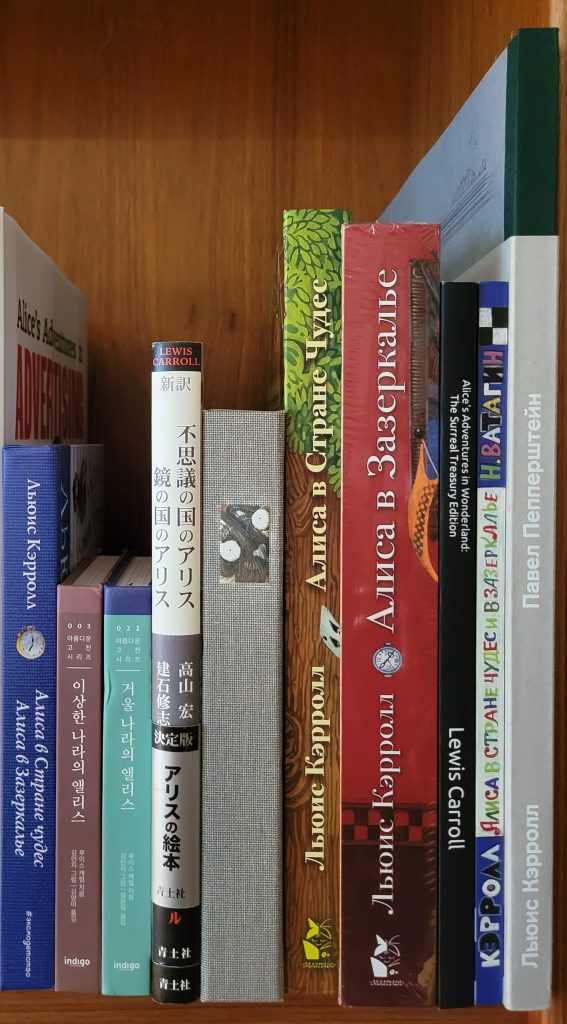
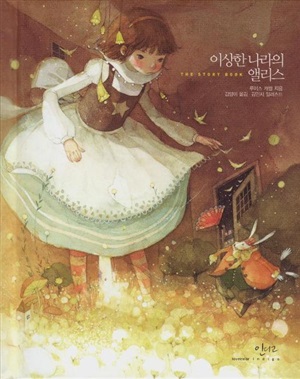
Korean illustrator Lee Woo-il’s wild take on 이상한 나라의 앨리스 (AW) reminds one of everything from Yellow Submarine to edgy animation, with Dalí, Steadman, and Daumier thrown in. Very audacious. ISBN 978-89-5709-140-1.

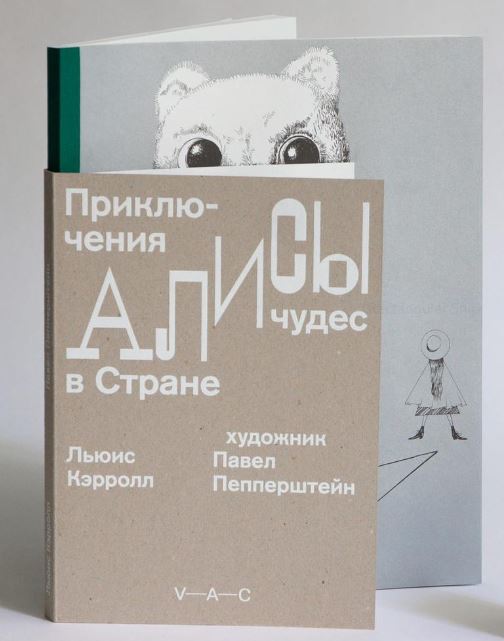
(Special bonus tenth): Since Pavel Pepperstein’s AW was reviewed in our last Illustrators post, we can just say that his companion Алиса в Зазеркалье (LG, V-A-C Press, 2024) is now available and well worth it! ISBN 978-5-907183-76-6.

Share

LCSNA-Published Definitive New Carroll Bibliography Now Available!

Charles L. Dodgson (Lewis Carroll) A Bibliography of Works Published in His Lifetime by LCSNA member and former president Charlie Lovett is now available for order from the University of Virginia Press!

Charles L. Dodgson (Lewis Carroll) A Bibliography of Works Published in His Lifetime by LCSNA member and former president Charlie Lovett is now available for order at a members’ discount from the University of Virginia Press.

The first major new bibliographical study of Lewis Carroll’s works in nearly half a century, this book is not just an updating of the 1979 Lewis Carroll Handbook, but an entirely new study organized along traditional bibliographical lines. Charlie includes a significant amount of material new to Carroll bibliography, including items discovered in recent years, descriptions of proof copies and reprints, detailed descriptions of contributions to periodicals, and much more. With over 250 illustrations and more than 600 primary and hundreds of secondary entries, this book is sure to become an indispensable companion for collectors, dealers, librarians, scholars, and enthusiasts.

Edward Guiliano, author or editor of seven books on Lewis Carroll, founding member and past president of the Lewis Carroll Society of North America writes: “Meticulously compiled, checked, and rechecked against more primary sources than were previously known, this comprehensive bibliography of the works of Lewis Carroll published during his lifetime is certain to be a standard reference for Carroll scholars and collectors for decades to come. Lovett, a renowned Carroll author and collector, has used modern digital research techniques and bibliographical standards to give us the definitive guide to all the works published by the author of the Alice books, as well as many new details on the nineteenth-century history in print of some of the world’s most inexhaustible tales and their extraordinary creator.”

LCSNA members can expect to see a generous 25% off discount code in their inboxes very soon, just in time for holiday shopping. And don’t forget, this is the second book published by the LCSNA this year! Lewis Carroll Collections & Collectors, by the aforementioned Edward Guiliano, also makes a great gift for the Carrollian in your life.

Share

The Annotated Song of the White Knight!

We’ve got some exciting news about an exciting member premium that is incredibly exciting!

Was that too many excitings? Not a chance!

In Through the Looking-Glass, when Alice meets the fumbling White Knight, he volunteers to sing her a song that is sometimes referred to as “The Aged Aged Man,” or “A-Sitting on a Gate,” “Haddock’s Eyes,” “I’ll Tell Thee Everything I Can,” or other titles.  Now available to LCSNA members is Matthew Demakos’  The Annotated Song of the White Knight: Errant Illuminations on Lewis Carroll’s Farcical Ode, an extended and profusely illustrated book that explicates the origins of the verses and analysis of the text, and examines Carroll’s amendments made from the earlier 1856 version. For the first time, this book discusses the White Knight’s false claim that “the tune’s my own invention,” describing instead how the melody mirrors real life. In addition to the five chapters of the book, there are appendices covering the illustrations of the poem by John Tenniel and many others, and even the Guinness parodies! The complete 96-page PDF is available for download by Lewis Carroll Society of North America (LCSNA) members only. For those who are not yet members of the LCSNA, now would be a great time to join!

Matthew Demakos is a Carrollian scholar and longtime LCSNA member who has been writing about the life and works of Lewis Carroll for over twenty years. His catalogue also contains many important publications on John Tenniel.

Share

Lewis Carroll Collections and Collectors Now Available!

“This is a handsomely produced and profusely illustrated volume that is sure to be of interest to other Carrollians, bibliophiles, and anyone interested in what makes collectors tick and their collections hum.” Arnold Hirshon, President, Lewis Carroll Society of North America

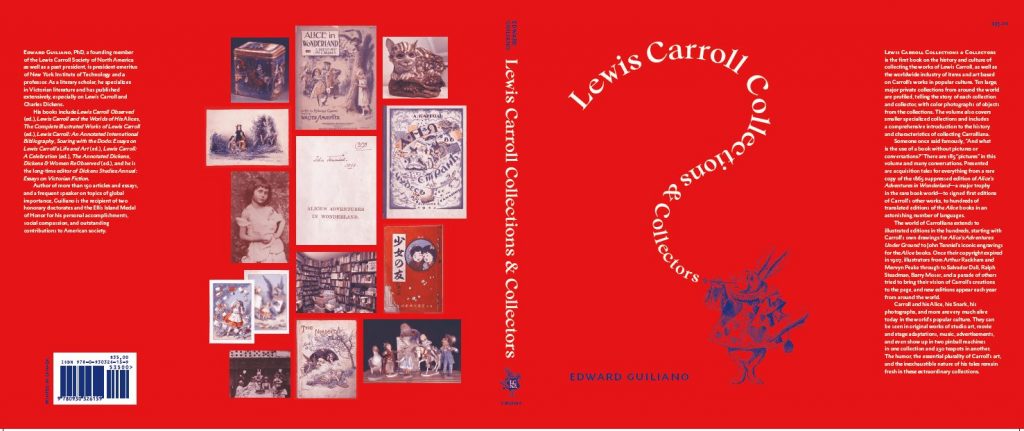
We are very pleased to announce the latest publication from the Lewis Carroll Society of North America and the University of Virginia Press, Lewis Carroll Collections & Collectors. This book, authored by LCSNA past President Edward Guiliano, is truly the first of its kind! Edward delves into the history and culture of collecting the works of Lewis Carroll, as well as the worldwide industry of items and art based on Carroll’s works in popular culture. He profiles ten large, major private collections from around the world, chronicling the story of each collection and and its collector. We have a feeling many of those collectors will be familiar faces to LCSNA members and friends! This gorgeous tome comes complete with color illustrations of treasures from the profiled collections. If that’s not enough to entice you, just take a look at the dustjacket!

Edward does not leave out smaller specialized collections and also includes a comprehensive introduction to the history and characteristics of collecting Carrolliana. Not just for Carroll enthusiasts, this volume is sure to appeal to rare book connoisseurs and all kinds of memorabilia collectors as well. From the author himself: “I’m not a Carroll collector, but I wanted to know and celebrate the stories and holdings of the many great collectors I’ve come to admire in the LCSNA. And as Alice notes, ‘what’s the use of a book without pictures or conversations in it,’ so I’ve included plenty of both.”

LCSNA members can look forward to a generous discount code being delivered to their inboxes very soon for Lewis Carroll Collections & Collectors. And stay tuned for news of another LCSNA book release next month! It’s a very prolific autumn here at the Lewis Carroll Society of North America.

Share

Astonishing Illustrators V

A note from the blogger: first, the title. Rather than continuing to add initial synonyms or repetitive phrases for “more,” I’ve decided to simply number them. Four similar posts have come before (links below), so this is V. I would also like to say something about my criteria for selection: it being an “outlier” is by far the most important. There are many editions out there with “cutesy,” colorful pictures aimed at children that are tiresome to collectors; these posts are about the edgy, unusual, different. I prefer that they be of recent vintage, but that’s not an absolute. I must have a physical copy to examine. Accessibility is desirable, but not a deal breaker. This time, there’s a bonus tenth one, as we showed Adriana Peliano’s Wonderland last time, but wanted the world to know there’s also a Looking-Glass now.

Les Aventures d’Alice au Pays des Merveilles (AW) comes in a bilingual French & English edition with wildly idiosyncratic images by Sandrine Domaine (L’Oxalide, 2014, ISBN 978-2-916881-98-0). Easy to find, wonderful imagery: what’s not to like?

Алиса в Стране Чудес и Зазеркалье (AW/LG) in Russian (Niburt, 2017, ISBN 978-5-716406-48-3) is illustrated in a truly playful and funny way by Dmitry Trubin. Available from the artist.

Attraverso lo Specchio (LG) in Italian (Nuages, 2004, ISBN 88-86178-32-8) features the sumptuous, spectacular engravings of Leonardo Cemak.

Алиса в Стране Чудес (AW in the Nabokov Russian translation, Moscow Textbooks, 2008, ISBN 978-5-89577-129-7) with Anna Yudina’s supremely evocative art was released to schools and libraries but not to bookstores, and is well worth hunting down. She also created the visual layout, fonts, typography, and decorations, earning an IBBY award for illustration in 2010.

不思議の国のアリス と 鏡の国のアリス (AW/LG) in a box set (Aki Shobo, 2015, ISBN 978-4-7505-1428-4) features the hilarious cartoon-y drawings of Maki Sasaki, one of Japan’s premier illustrators, picture book writers, and manga artists. Also available as individual volumes from Amazon.jp.

While randomly perusing my Russian library, I came across Приключения Алисы в Стране Чудес и Алиса в Зазеркалье (AW/LG, Middle-Uralysk, 1987, no ISBN) with the spectacularly innovative and intricate drawings by N. V. Tikhonova. Truly stunning!

Giovani Giannini’s twenty-one full-page, highly detailed drypoint engravings for a signed and numbered fine-press edition of Les Aventures d’Alice au Pays des Merveilles (AW in French, Michel de L’Ormeraie, 1976, no ISBN) are slyly humorous, quite unusual, eccentric, and splendidly rendered.

不思議の国のアリス ビジュアルファンBOOK (AW: Visual Fan Book, Mynavi, 2015, ISBN 978-4-8399-5513-7 contains the text of AW in both Japanese and English, many notes and essays in Japanese, and illustrations by thirty-two different popular artists, all of whom incorporate photographs of the pretty model Midori Fukusawa in their work. Available on Amazon.

Загадочный Гость (Mysterious Guest, Nigma, 2020, ISBN 978-5-4335-0762-3) is a collection of Carroll’s poetry, both Alice and otherwise, translated into Russian. Evgeny Antonenkov’s charmingly witty illustrations are enough reason to have this book. Obtainable through Ruslania.

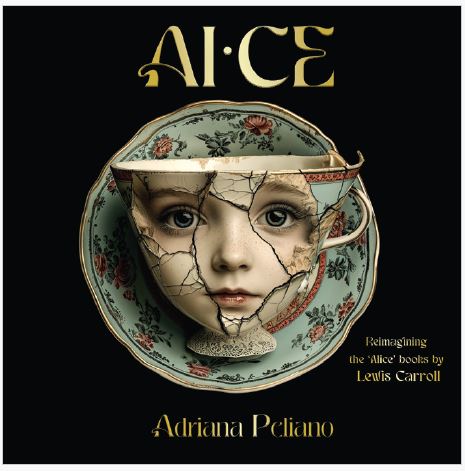
Adriana Peliano’s “reimagining,” a delightful, nearly wordless, romp through Wonderland, was in our last post. She is a brilliant AI artist, and the journey is light and lovely, symbolic and surreal. Now her companion LG is available: You can get a signed hardcover (English or Portuguese) for US$30 by emailing her. A Kindle edition is forthcoming.

Astonishing Illustrators IV
Astonishing Illustrators III
Astonishing Illustrators II
Astonishing Illustrators I

Share

More Nine More Astonishing New Illustrators

As my posts Nine Astonishing New Illustrators, Nine More Astonishing New Illustrators, and Yet Nine More Astonishing New Illustrators have received much welcome in the Carroll-collector community, I felt it was time to do another. Once again I thank Instagrammers @semperluxus, @neverenoughalicebooks, and @chimerainwonderland for finding many of them!

Adriana Peliano’s “reimagining” is a delightful, nearly wordless, romp through Wonderland. She is a brilliant AI artist, and the journey is light and lovely, symbolic and surreal. You can get a signed hardcover (US$35) by emailing her or a Kindle edition.

Pavel Pepperstein’s idiosyncratic and gloriously oversize (12 × 15 inches; 30 × 38 cm) Алиса в Стране Чудес (AW) came out from V–A–C Press in 2020. His playful gestures break through common sense, mixing Russian traditional icons, avant-garde Russian art, and images from Western pop culture. ISBN 978-5907183070.

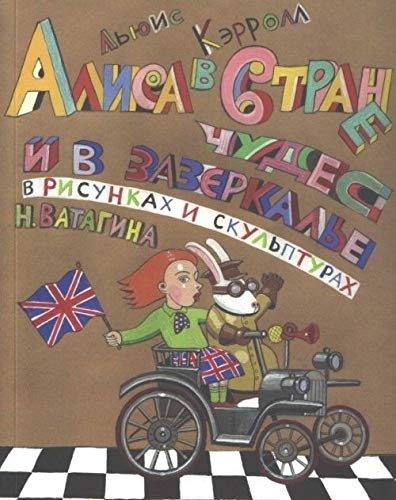
SNL’s Festrunk Brothers’ “wild and crazy” are the most appropriate adjectives for a large-format Алиса в Стране Чудес и в Зазеркалье (AW & LG) illustrated by Nikolaj Vatagin (Krasnyj Parokhod, 2015). With lightly excerpted texts, the artist’s imagination takes off with eccentric drawings and photographs of his sculptures in a kaleidoscope of inventiveness. Warning: completely un-PC, with nudity and racial stereotypes. Currently available from Ruslania in Finland. ISBN 978-5914870642

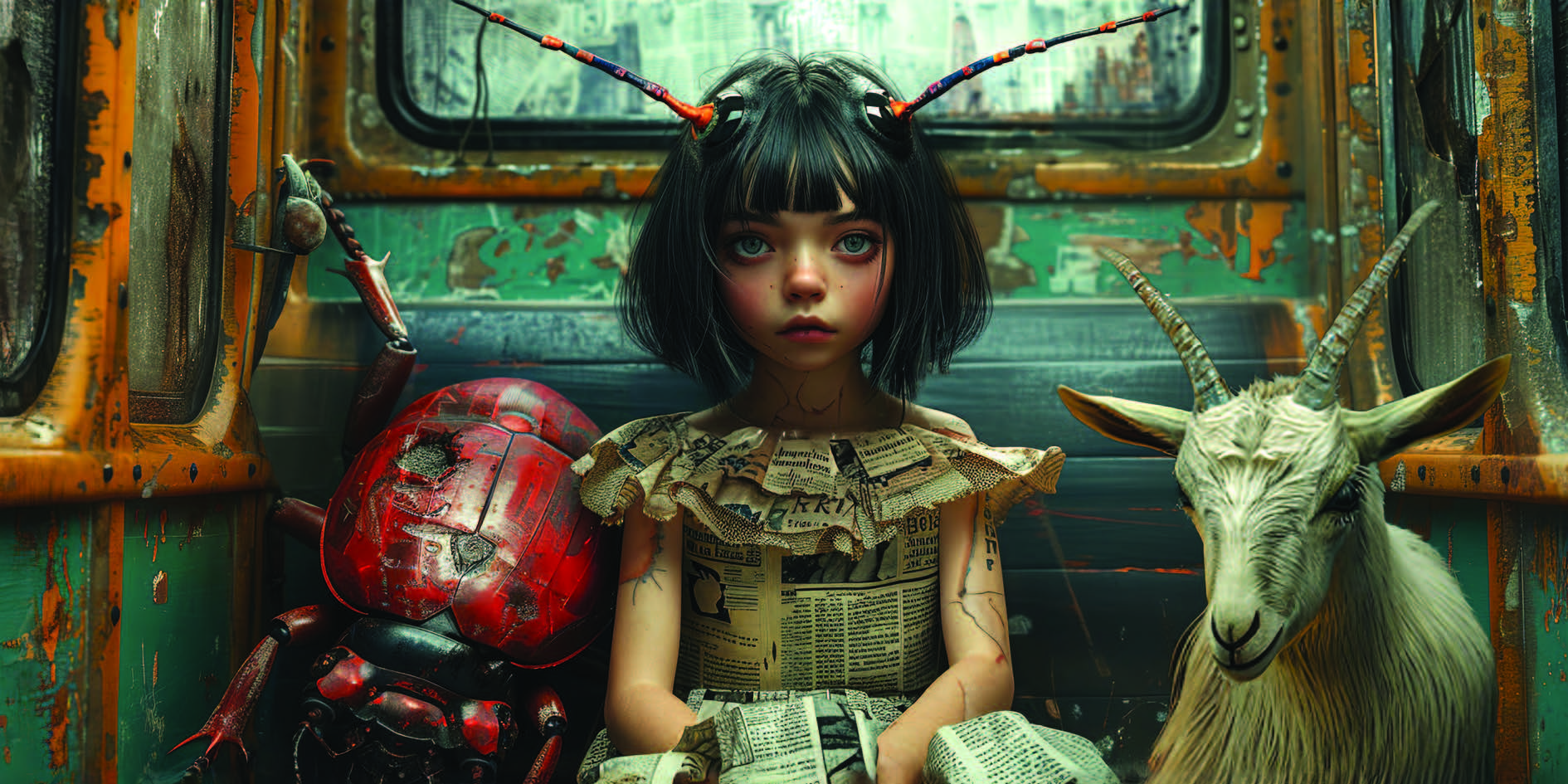
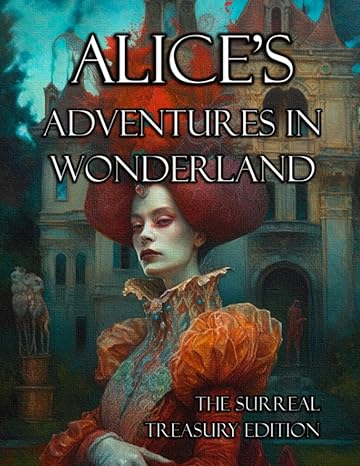
Kent David Kelly has more than 130 books to his credit; several are editions of Carroll’s books (his Snark is out and Looking-Glass is in the works). This volume is large, thick (230 pages), lavishly illustrated with 145 AI-generated images, and ends with with pages of notes called “secrets,” incorporating biographical and Victorian data, not to mention, it must be said, his own imagination. ISBN 979-8388826787, available from Amazon.

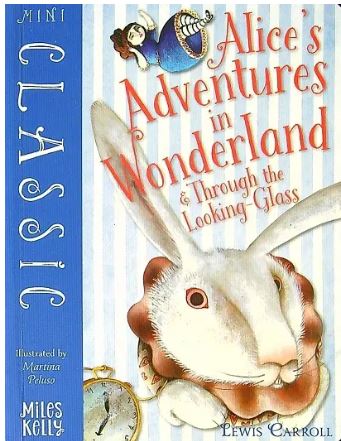
Martina Peluso’s lighthearted, Botero-esque illustrations to AW first came out in 2017 in a large hardback “Illustrated Classics” edition by publisher Miles Kelly (978-1786176769). With LG added and reformatted into a small “Mini Classic,” it is now available in Russian (978-5041062316) from Amazon in English (978-1786176769)

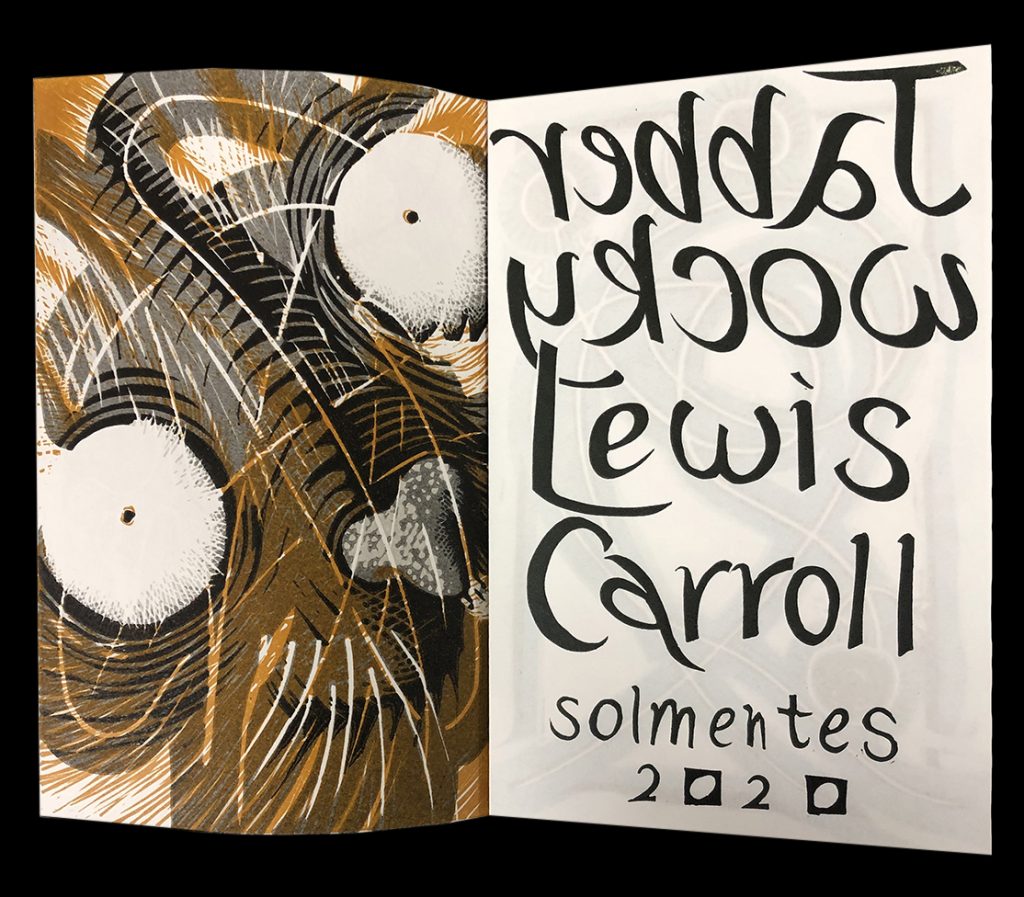
David Esslemont’s fine-press Jabberwocky came out in an edition of forty copies in 2020. The linocuts are mostly color “reduction linocuts,” i.e., printed from the same block cut several times. The calligraphic text was drawn with a broad-nibbed pen on linoleum blocks that when printed render the letters in reverse, just as Alice found them. The images are stunning and the box it comes in contains a mirrored sheet so one can read the text. Sort of.

Illustrator Minji Kim’s small two-volume set from Indigo, 2014, in Korean (AW 978-89-92632-12-6, LG 978-89-92632-98-0) showcases her lovely, delicate art, often with unusual perspectives. Wonderland (978-8992632799) is also available in English.

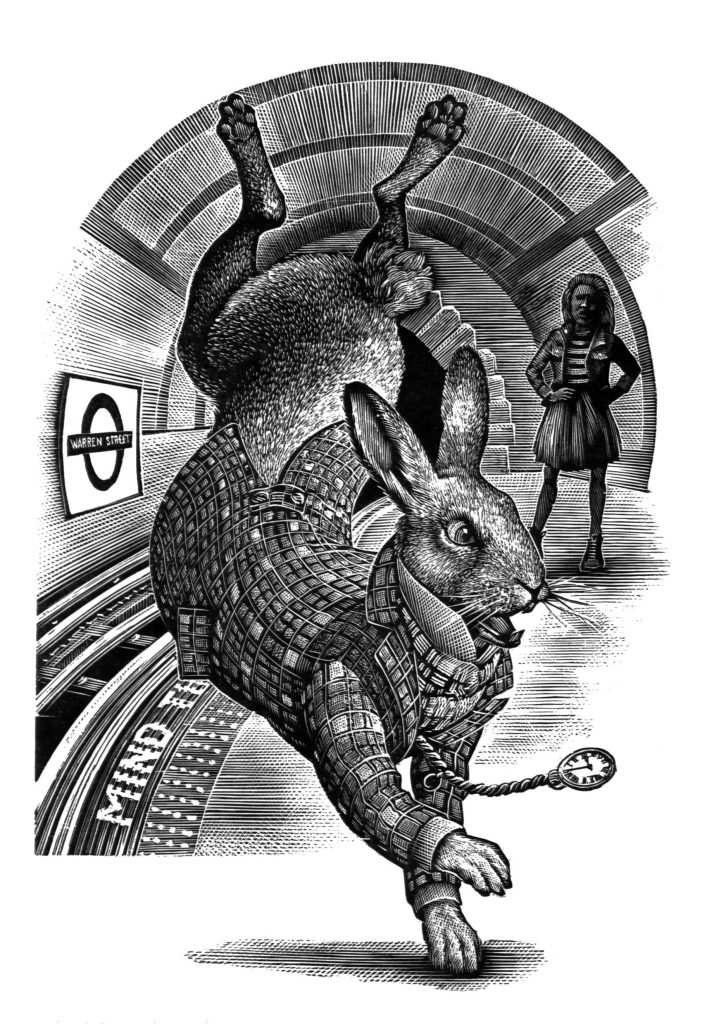
The text of Alice’s Adventures on the London Underground is pretty much like every other pastiche you’ve ever read, but the engraved illustrations were truly stunning. It’s available as a trade paperback and also in a deluxe boxed edition with twelve signed etchings from Blackwell’s in the UK.

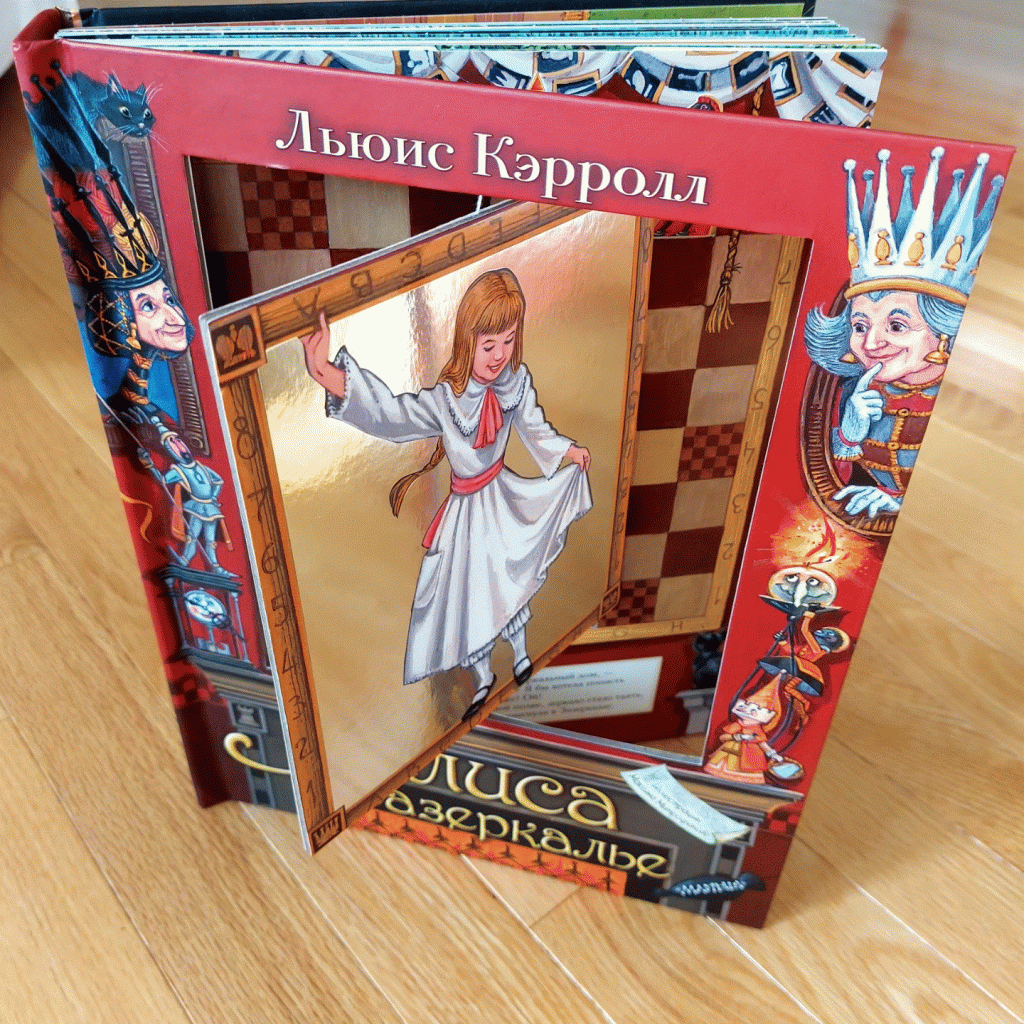
Maxim Mitrofanov first illustrated Wonderland and Looking-Glass for Rosmen in 2010. Both books contained the full text and gorgeous, detailed colored illustrations on each page (his LG was reviewed in KL 85:51). Now, over a decade later, Mitrofanov revisits the Alice books, this time for AST in abridged retellings with ingenious, sumptuous 3D pop-ups. From Ruslania: Алиса в стране чудес (AW) 978-5171105334; Алиса в Зазеркалье (LG) 978-5171229870.

Share

At Long Last, Alice in a World of Wonderlands, The Sequel!

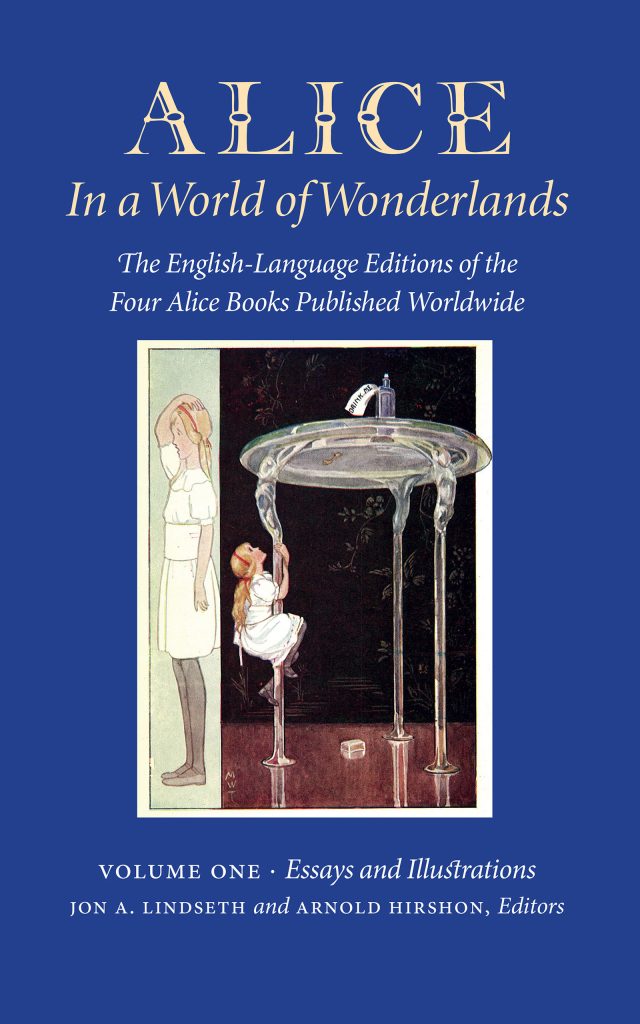
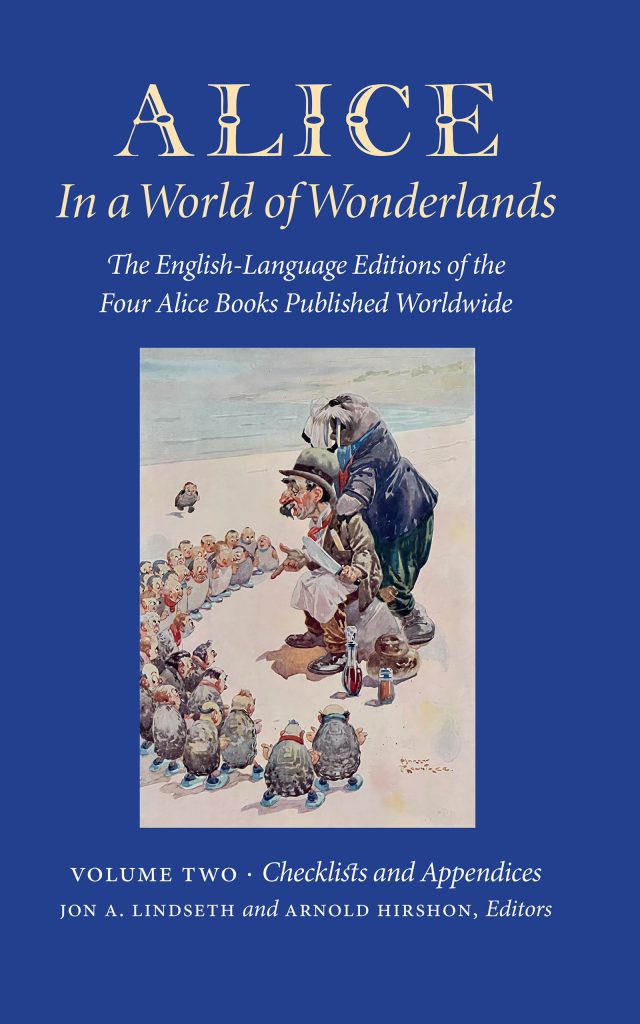
Alice in a World of Wonderlands: the English-Language Editions of the Four Alice Books Published Worldwide is now available in both the standard print edition and e-book versions!

This new two-volume set was edited by Jon A. Lindseth (who in 2015 edited the companion Alice in a World of Wonderlands: the Translations of Lewis Carroll’s Masterpiece) and Arnold Hirshon (the current President of the Lewis Carroll Society of North America).

Volume One (535 pages) explores Alice’s world through eleven essays written by major scholars and collectors from around the world. The volume covers (1) the publishing and textual history of the books, (2) the history of illustrated editions created by thousands of artist (including a detailed analysis that includes over 550 images, most in color) and (3) personal histories of contributors as to how and why they became interested in the study of works by Lewis Carroll.

Volume Two (463 pages) contains extensive checklist entries of 4,400 different editions of the four books published in English, and a statistical analysis and indexes of both the publisher and illustration histories.

The print edition for Volume One is $102.99 (ISBN 9781626132528) and for Volume Two is $42.99 (ISBN 9781626132580). Both volumes and e-book versions are available from Amazon and from Barnes and Noble. E-book versions for the two volumes are also available from Apple, Smashwords, and Google Play (coming soon). E-book Volume One costs $29.99, and E-book Volume Two is $15.99.

There is a Deluxe Edition that is limited and numbered with only 100 2-volume sets produced. Further information about all of the editions, and purchasing information for the Deluxe Edition, is available at ATBOSH Media.

Share

Yet Nine More Astonishing New Illustrators

As my posts Nine Astonishing New Illustrators and Nine More Astonishing New Illustrators have received much welcome in the Carroll-collector community, I felt it was time to do another. Once again I thank Instagrammers @semperluxus, @neverenoughalicebooks, and @chimerainwonderland for finding them!

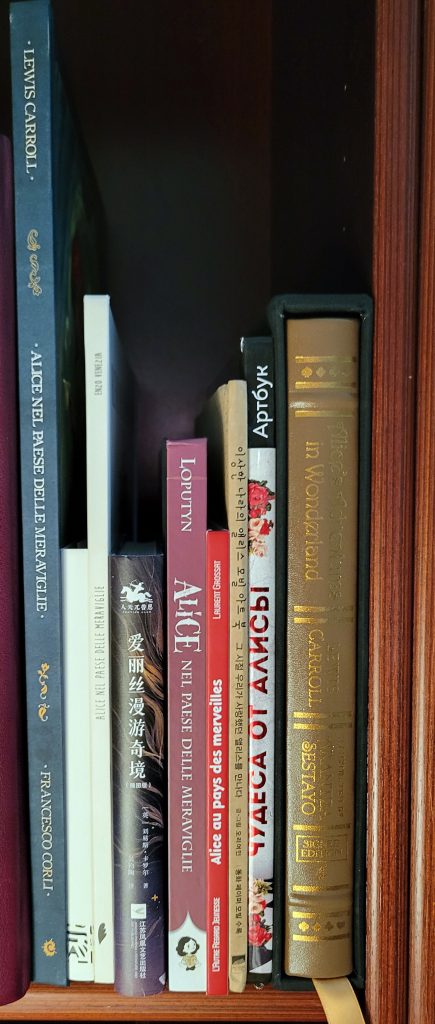
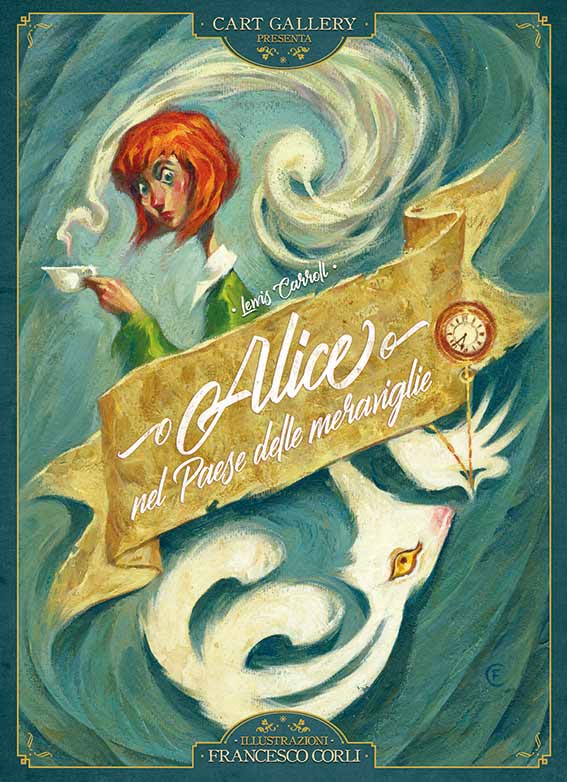
The first, and by far the largest (16.5 x 12 inches, 42 x 30 cm) is this lushly illustrated Italian one by Francesco Corli. The art was taken from a series of 50 paintings (all shown full-page in a suite at the back of the book) done for an exhibition at the Cart Gallery in Rome in May. Although signed and limited to 100 copies, it is quite reasonably priced and obtainable from the Gallery here.

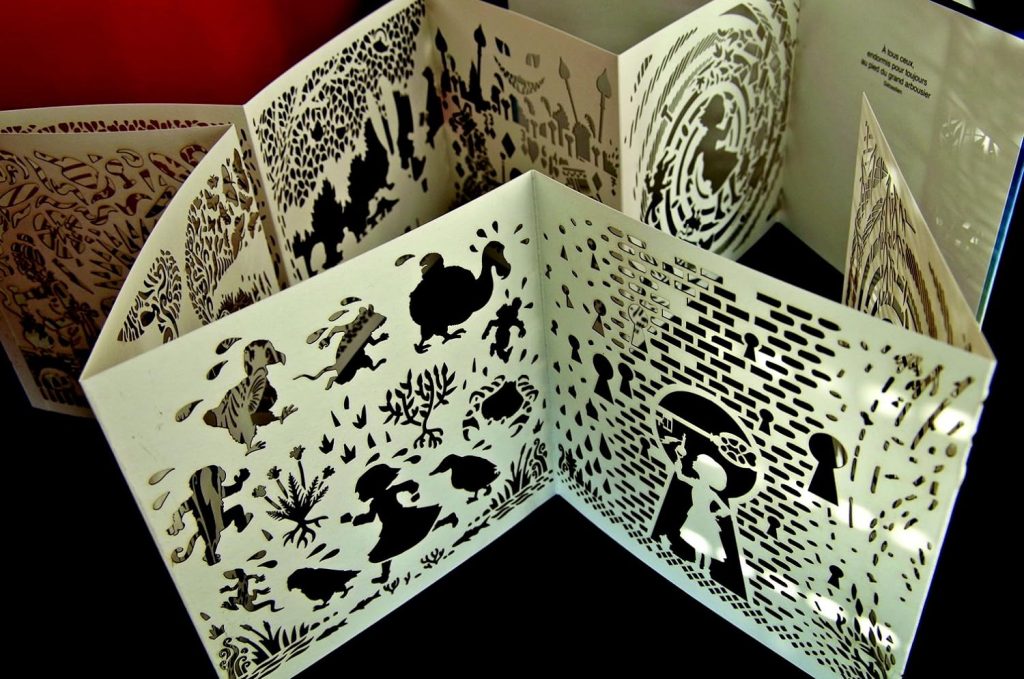
Although the only text is a one-page summary, Les Aventures d’Alice au Pays des Merveilles contains Sébastien Orsini’s exquisite paper cut-outs in a single, folded 67-inch (170 cm) sheet (Lirabelle, 2015) ISBN: 978-2358781398. Be sure to order the paperback version; otherwise you will be led astray.

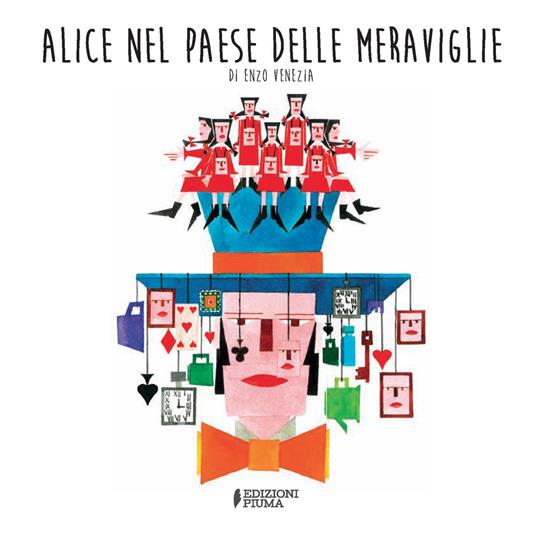
Enzo Venezia’s geometrical and wildly amusing, colorful pictures accompany a retelling (also by Venezia and from Alice’s POV) of the tale in rhymes and nursery-rhymes in a large square (12 in, 30 cm) format (Piuma Editions, 2020, ISBN 978-8897443230). A unique approach, and a true delight from end to end.

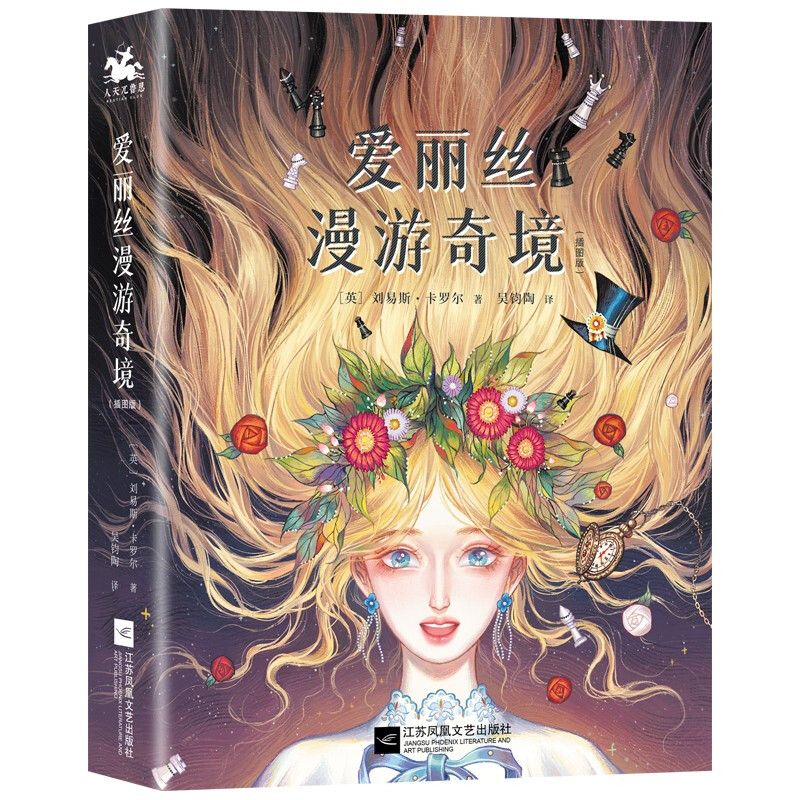
A Chinese version of both Wonderland (爱丽丝漫游奇境) and Looking-glass (Jiangsu Phoenix Literature and Art Publishing, 2022) is illustrated by Gu Rui En in a very, well, pretty manner. The translation is also said to be new and interesting. I’ll save you the trouble: you can get it on Amazon.

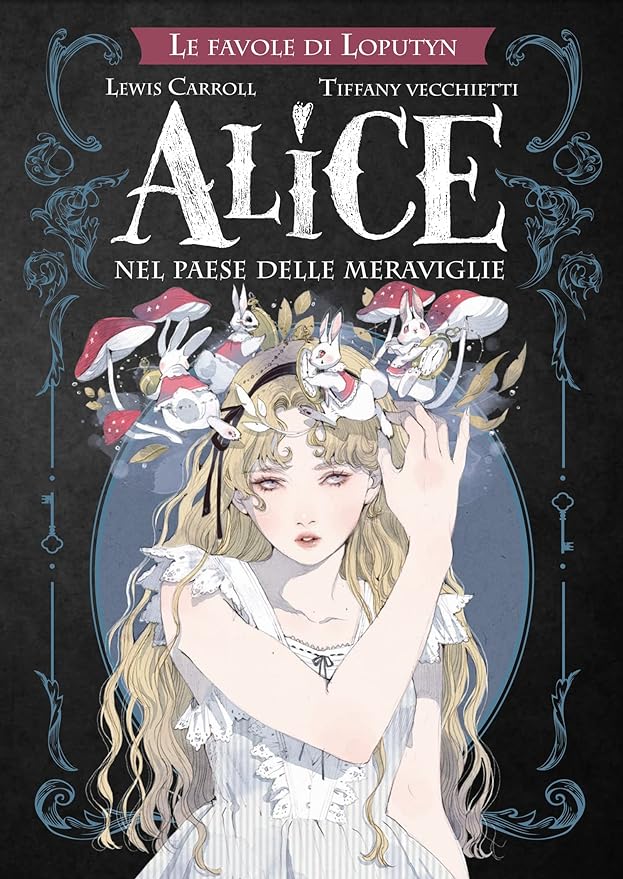
Jessica Cioffi, under the nom de plume “Loputyn,” has produced a number of very lovely drawings in a muted pastel palette (although a few somewhat arbitrary skulls, eyeballs, and sharp teeth are woven in). It is available in both Italian (Rebelle, 2022, ISBN 978-8894559088) and Russian (Алиса в стране чудес, Mann-Ivanov-Ferber, 2023, ISBN 978-5002140879).

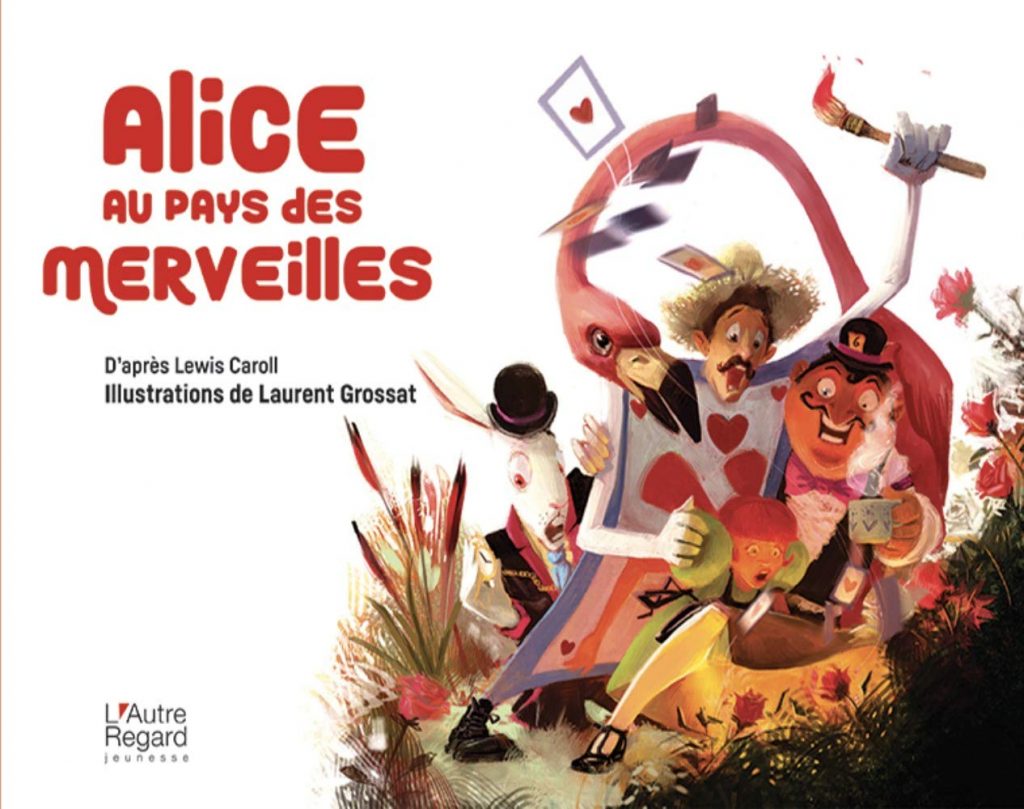
Truly wacky and laugh-out-loud funny pictures by Laurent Grossat highlight this French edition (L’Autre Regard, 2020, ISBN 978-2490906284). The text is retold and the art is hysterical.

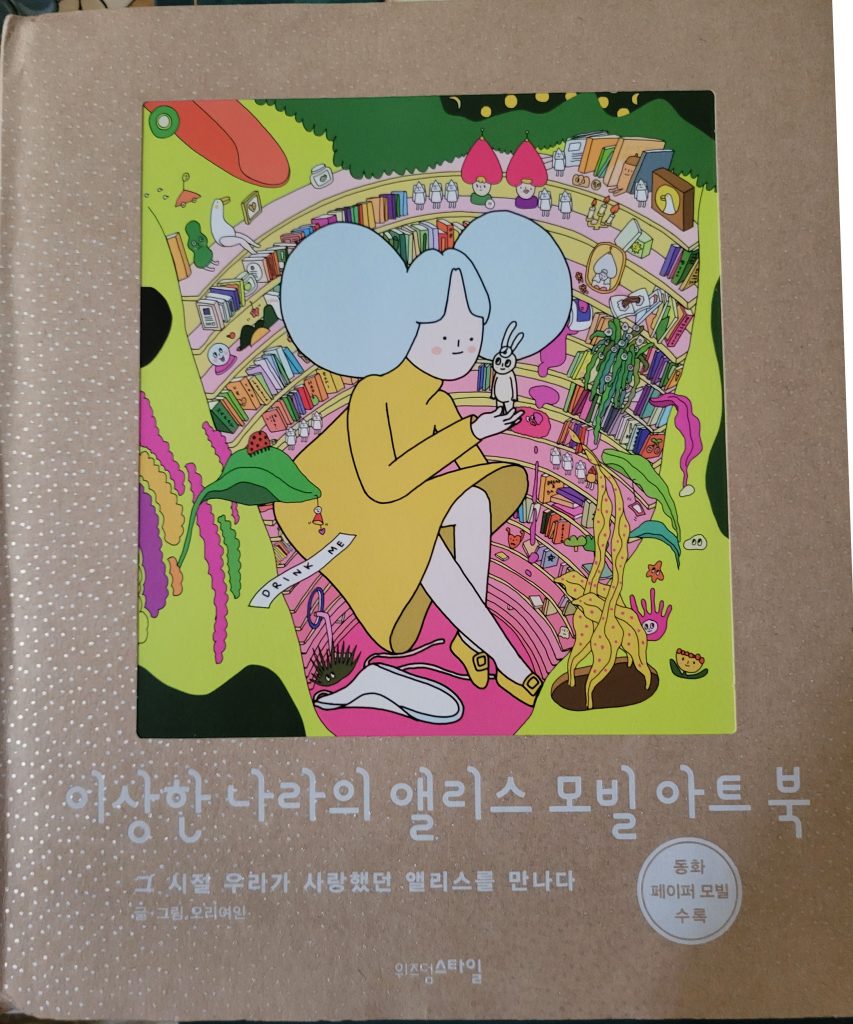
A psychedelically colored Korean edition called Alice in Wonderland Mobile Art Book (이상한 나라의 앨리스 모바일 아트북) contains amusing, highly stylized illustrations by Lady Duck and, at the back, an assemble-able mobile! ISBN 978-8998010614. Amazon shows it paired with another book, which is Anne of Green Gables, not Looking-Glass.

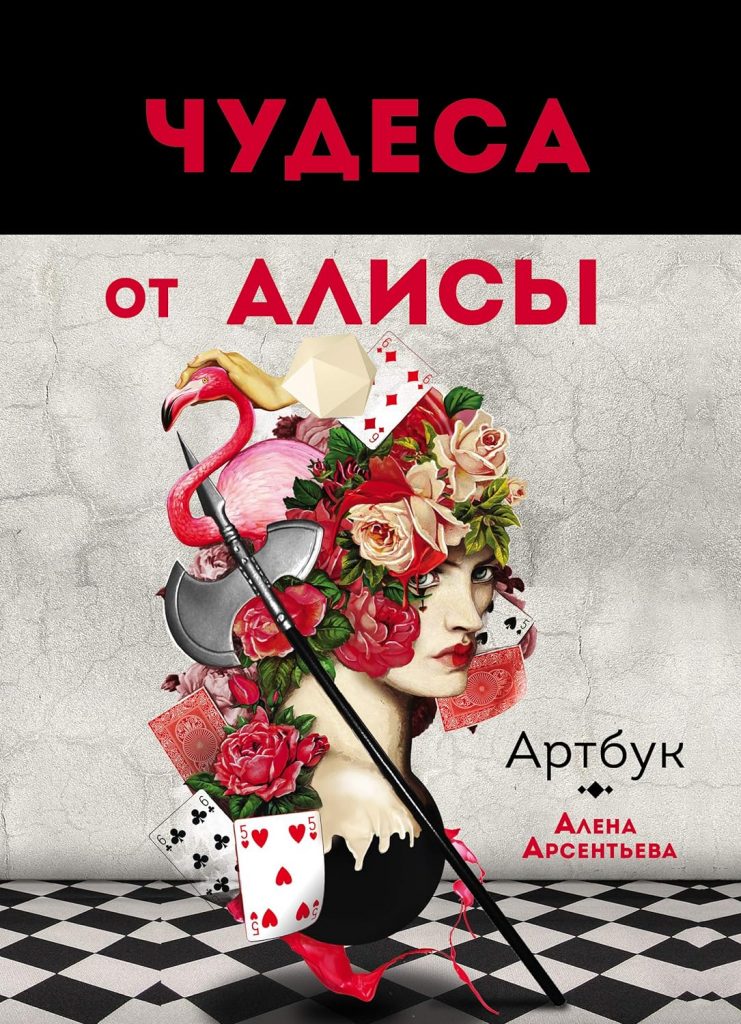
In her artbook Miracles from Alice (Чудеса от Алисы, Артбук, 2016), collagist/artist Alena Arsentieva (Алена Арсентьева) illustrates both Alice books and one image for the Snark. There is very little text, in Russian mainly, but an extract of The Snark appears in English. ISBN 978-5699885626.

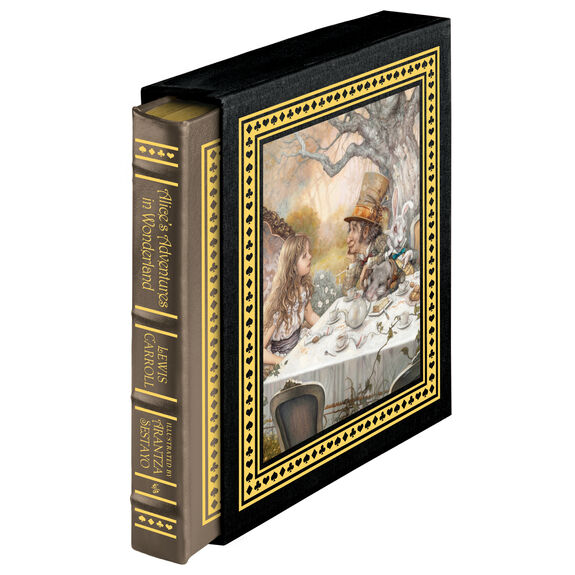
Easton Press’s Deluxe Limited Edition features eight full-color and nine pencil illustrations by acclaimed Basque artist Arantza Sestayo, each hand-tipped into the book and protected by a translucent overlay. The book comes in a custom-crafted clothbound slipcase and is a stunning example of the bookmaker’s art, as well as featuring her finely rendered drawings. (Perhaps as a bonus or teaser, an image of Looking-Glass’s Queen Alice and the Jabberwock comes at the very end!)

Share